




Why Do River Protective Measures Fail? Common Mistakes in Selecting and Designing Solutions
Protecting a river or a slope is not simply a matter of covering a surface. An effective solution must take into account the behavior of water and soil, as well as the specific conditions of the site.
Failures in hydraulic protection structures can manifest as surface erosion, scouring, material loss, displacement of the protection, or slope instability. In many cases, the cause lies not solely in the material used, but in a selection process that does not fully account for the failure mechanism.
Therefore, before choosing a solution, it is essential to answer the following questions: What is causing the failure, and how should the system behave to control it?
Designing Without Understanding the Problem
One of the most common mistakes is choosing protection based on a single condition, without taking previous studies into account.
The design should take into account, among other factors:
- Flow rate and flow velocity.
- Cutting efforts.
- Geometry and slope of the river channel.
- Soil type and condition.
- Undermining of the riverbed and the toe of the slope.
- Sediment transport.
- Curvature and changes in the direction of flow.
- Possible deformations or settlement.
Ignoring the potential for erosion
A protective structure can remain stable on the surface and yet fail at its base.
When the flow erodes material at the toe of the slope, a gradual loss of support occurs:
Undermining → loss of support → deformation → failure.
For this reason, the design must take into account not only the surface to be protected, but also:
- Protection at the base of the slope.
- Foundation depth.
- Transitions.
- Start and completion of construction.
- Connections to the subgrade and existing structures.
To think that a rigid solution is always the best
Riverbeds and slopes may experience settlement, deformation, and differential movement.
Under these conditions, a completely rigid solution may have limitations if it is unable to accommodate ground movements.
For this reason, flexible linings are an important alternative in projects that require a combination of water protection and adaptability.
The available options include:
Geocontainers
They allow soil at the site to be contained to form structures that are heavy and stable. They can be used to protect banks, the bases of slopes, reinforced shorelines, and areas subject to erosion.
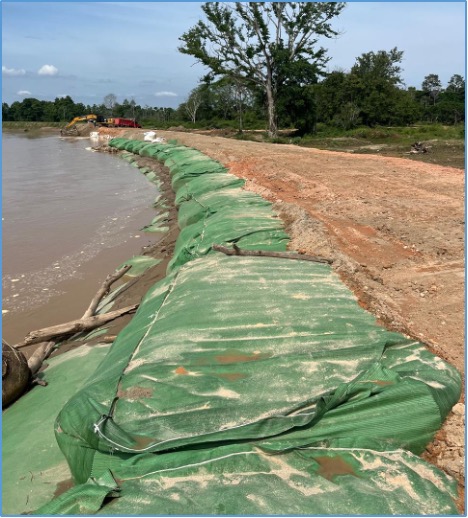
Photo 1: Installation of geocontainers to protect riverbanks.
Rockfill mattresses enclosed in geogrid
They combine the protective capabilities of rockfill with the confinement provided by geogrids, creating flexible systems for protecting riverbeds, slopes, and areas exposed to hydraulic forces.
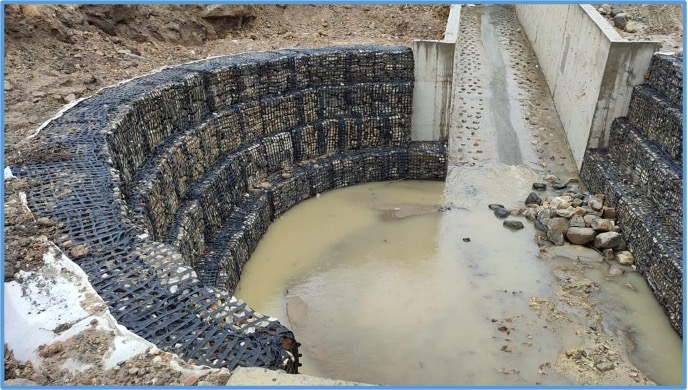
Photo 2: Rock-fill mattresses enclosed in geogrid for scour control in canals.
Hinged Concrete Block Systems
They enable the development of flexible, continuous linings capable of adapting to specific ground deformation conditions, designed for hydraulic protection and erosion control applications.
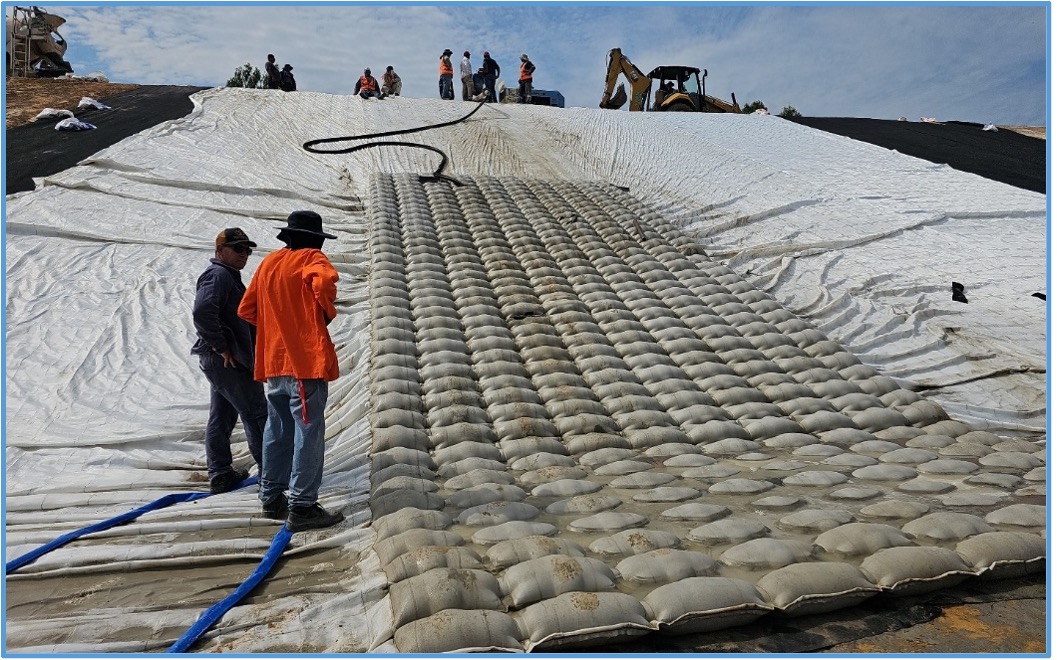
Photo 3: A hydraulic channel protected by a system of confined rock-fill mattresses.
How do you choose the right solution?
The selection process should follow a simple sequence:
Diagnose:
Characterize the hydraulic, geotechnical, and geometric conditions of the site.
Identify the failure mechanism:
Determine whether the problem is due to erosion, scouring, instability, fine-grained material migration, deformation, or a combination of these phenomena.
Define the required function:
Determine whether filtering, draining, containing, reinforcing, stabilizing, or protecting is necessary.
Compare alternatives:
Evaluate conventional and geosynthetic solutions based on the actual conditions of the project.
Design the entire system:
Consider surface protection, base, anchors, filters, drainage, transitions, and installation conditions.
The key lies in designing the system, not just selecting the product
The correct decision depends on the failure mechanism, hydraulic conditions, soil behavior, and material requirements.
At Geomatrix S.A.S., we develop geosynthetic solutions tailored to the specific needs of each project, integrating technical expertise, materials, and construction systems to address challenges related to erosion, hydraulic protection, and stabilization.