





Regulations on the use of retaining walls in reinforced soil (Colombia)
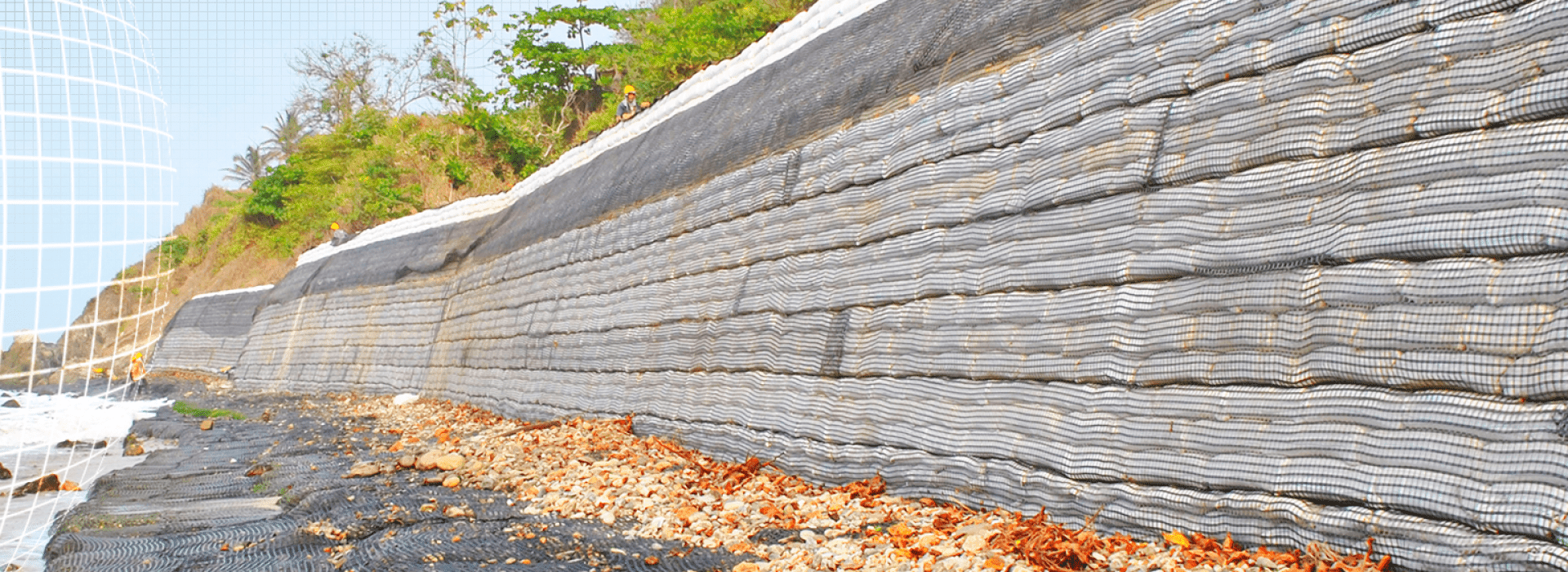
Reinforced soil retaining walls have become a construction alternative worldwide, which brings multiple benefits compared to traditional concrete walls. Although its effectiveness has been demonstrated, the Colombian circle uses a series of documents and standards that support its quality. (Read: Retaining walls VS. Concrete walls).
First, there is the Colombian bridge design standard, prepared by the National Road Institute (INVIAS), based on the FHWANHI-10-024/025 manual and updated for the last time in 2014. This is taken as a reference for the design of walls in soil reinforced with geosynthetics, approaches and load-bearing stirrups in reinforced soil.
On the other hand, the Colombian Regulation of Earthquake Resistant Standards (NSR-10), has defined some mandatory guidelines for the design of reinforced retaining walls. These guidelines seek to safeguard the project in the event of a seismic event.
As a main source of consultation in the Colombian circle, there is the manual FHWANHI-10-024/025. This document, prepared by the FHWA (Federal Highway Administration), in agreement with the NHI (National Highway Institute), contains all the theory concerning the design of reinforced retaining walls. Likewise, there is the German manual EBGEO and the Japanese manual “Use of geosynthetics to improve seismic performance of earth structures”.
For the implementation in Colombia of reinforced retaining walls, INVIAS established criteria on the conditions of the forming materials, these must be supported by accredited laboratories in compliance with the ISO 17025 standard, which certifies the laboratory's competence to carry out tests.
At Geomatrix we have the only laboratory for geosynthetic materials accredited in the country, under the standards of ISO 17025. This allows us to uphold our promise of quality, innovation and safety for solutions in soil reinforced with geosynthetics. Why develop them? We invite you to consult our document.