




Tips for Designing Flood Control Barriers
Colombia is one of the countries in Latin America that has presented the most floods in the last 30 years. A report by the National University of Colombia showed that in this period there were 8,000 floods in the country, leaving a significant number of victims.
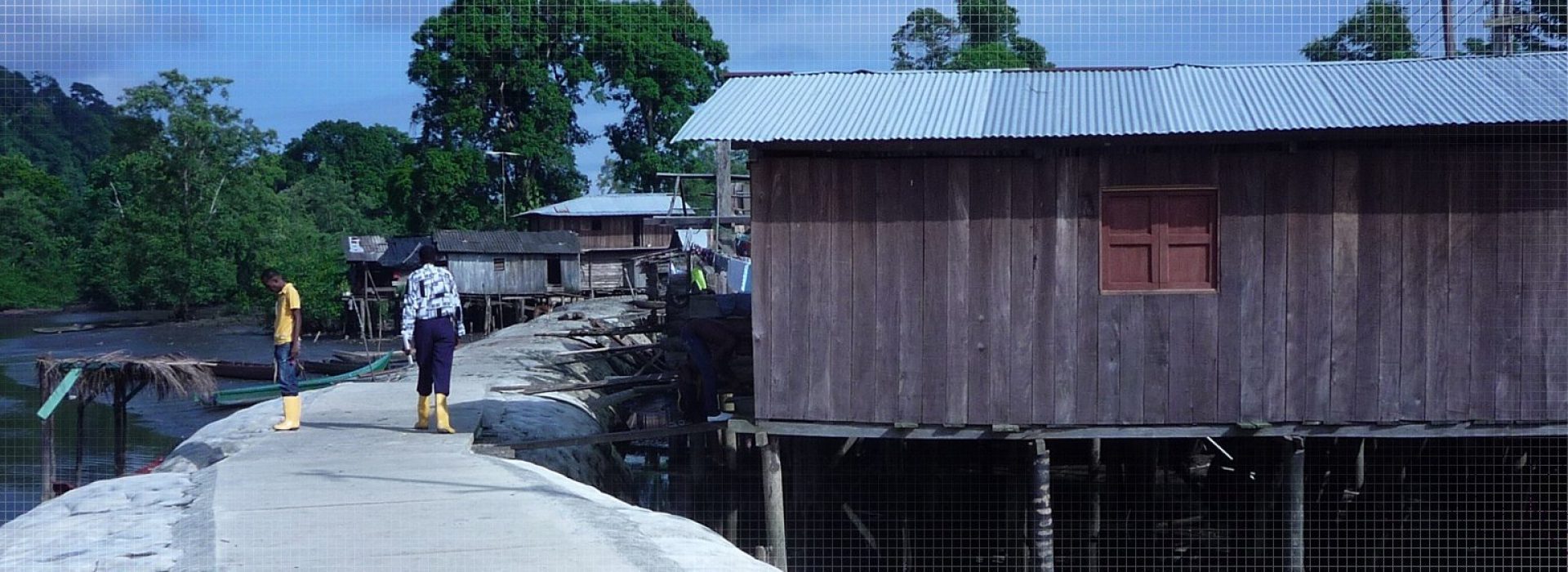
Many towns have suffered flooding as a result of the La Niña phenomenon, as is the case of Salahonda, in the department of Nariño. There, a barrier was implemented to control flooding with geosynthetics, which was effective and now protects the municipal head from future floods of the Patía River.

The following aspects were fundamental in the design of the protection structure with geotextile tubes.
-
Choose a cost-efficient solution
A high percentage of floods in Colombia occur in remote areas with difficult access. This causes the transportation of materials and the use of machinery to become an additional problem to execute the work, significantly increasing the execution costs of the project. To the extent possible, always take advantage of the resources available in the affected region.
In Salahonda, the best solution used the same resources in the area: materials and labor, which made it possible to optimize the costs of transporting materials, machinery, and project execution times.
-
Don't limit yourself to traditional materials
It is time to rethink the use of traditional materials such as concrete, rip-rap, among others. These require complex installation processes and may have environmental restrictions. Currently, materials with high-specification technical properties can be found, which play a useful role in controlling future floods.
The aforementioned aspects were taken into account to design the flood control barrier that was executed in Salahonda, Nariño. If you are interested in knowing the details of the design, the materials and products used, we invite you to consult the document on this success story.