





Control of Severe Erosion on Riverbanks Using Geocontainers: Hydraulic Response to High-Energy Flows
An efficient solution for stabilizing riverbeds and protecting infrastructure
Rivers are dynamic systems that are constantly evolving due to the action of flow, sediment transport, and extreme hydrological events. When these conditions exceed the natural resistance capacity of the riverbanks, lateral erosion and scouring occur, compromising the stability of the river channel, causing land loss, and putting roads, bridges, homes, and strategic infrastructure at risk.
Given this situation, geosynthetics have established themselves as one of the most efficient alternatives for developing sustainable hydraulic solutions, enabling the construction of projects with less environmental impact, faster construction times, and excellent hydraulic performance.
Among these technologies, geocontainers represent a highly specialized solution for bank rehabilitation and the control of severe erosion processes.
Why Use Geocontainers in Water Projects?
Geocontainers are units made of high-strength geotextiles, designed to be filled with on-site granular material and form flexible structures capable of dissipating flow energy and stabilizing the river channel.
Unlike traditional rigid solutions, their flexible behavior allows them to adapt to minor ground settlement without losing their structural functionality, thereby extending the service life of the structure.
Among its main hydraulic functions are:
- Restoration and reconstruction of eroded riverbanks.
- Protection against lateral erosion in natural waterways.
- Control of local and general undercutting processes.
- Stabilization of the slope foot to prevent progressive failure.
- Protection of infrastructure near the riverbed.
- Restoration of the river's hydraulic cross-section geometry.
Hydraulic Response to High-Energy Flows
During extraordinary floods, the increase in flow velocity exerts shear stress on the riverbanks, accelerating the detachment of natural material.
Geocontainers work by modifying this interaction between water and the ground through various hydraulic mechanisms:
Energy Dissipation
The surface formed by the geocontainers increases hydraulic roughness, reducing the energy of the flow along the riverbank and decreasing the erosive capacity of the water.
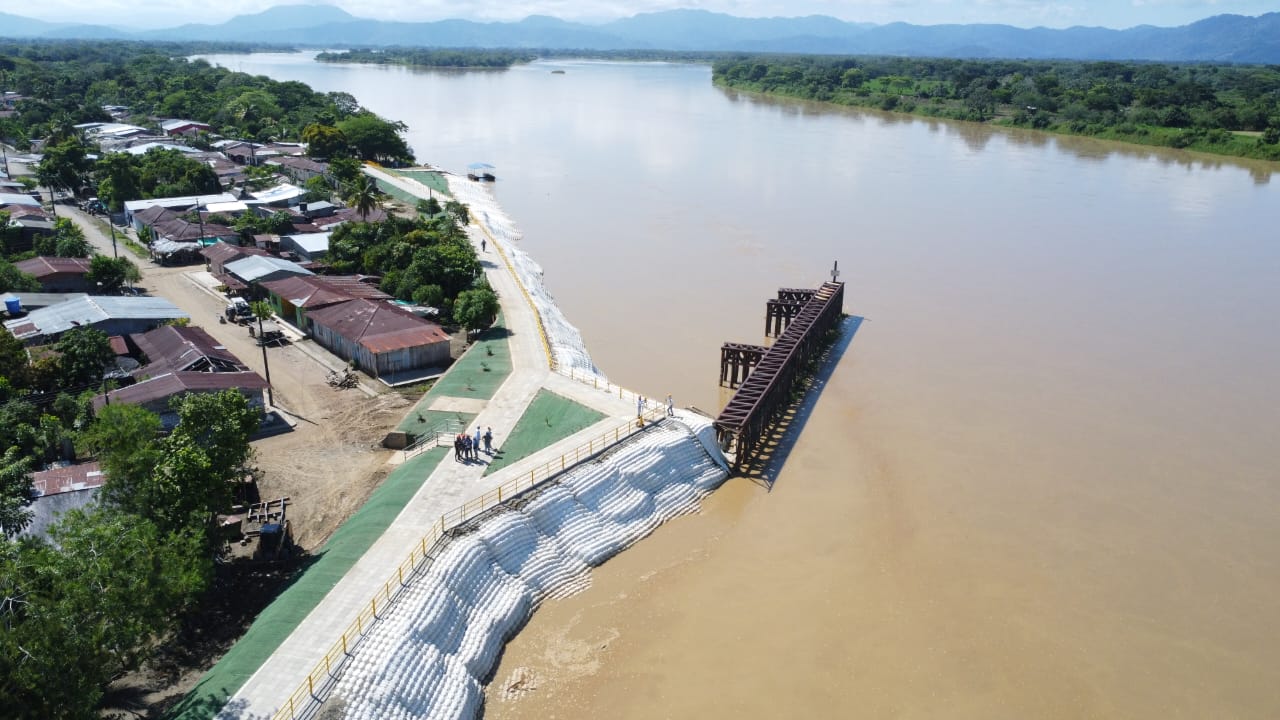
Image 1: Geocontainers for controlling lateral erosion along riverbanks.
Slope Foot Protection
Most riverbank failures begin with scouring at the base. Geocontainers can be used to build support structures that protect the toe of the slope, preventing the bank from gradually receding.
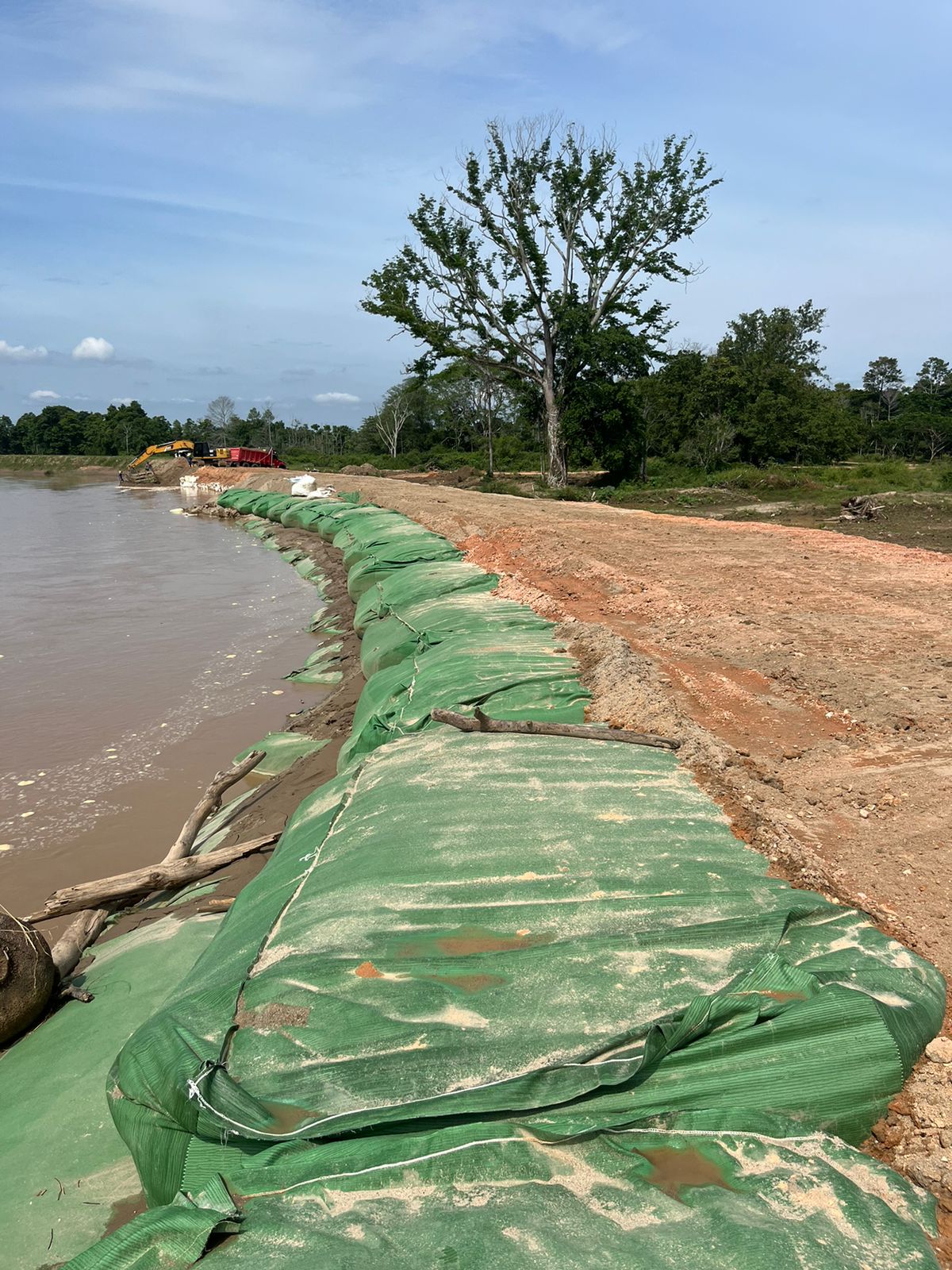
Image 2: Geocontainers adapted to the riverbed along the riverbank.
Lateral Erosion Control
By forming a continuous and stable lining, material detachment from the slope is limited even during high-energy events.
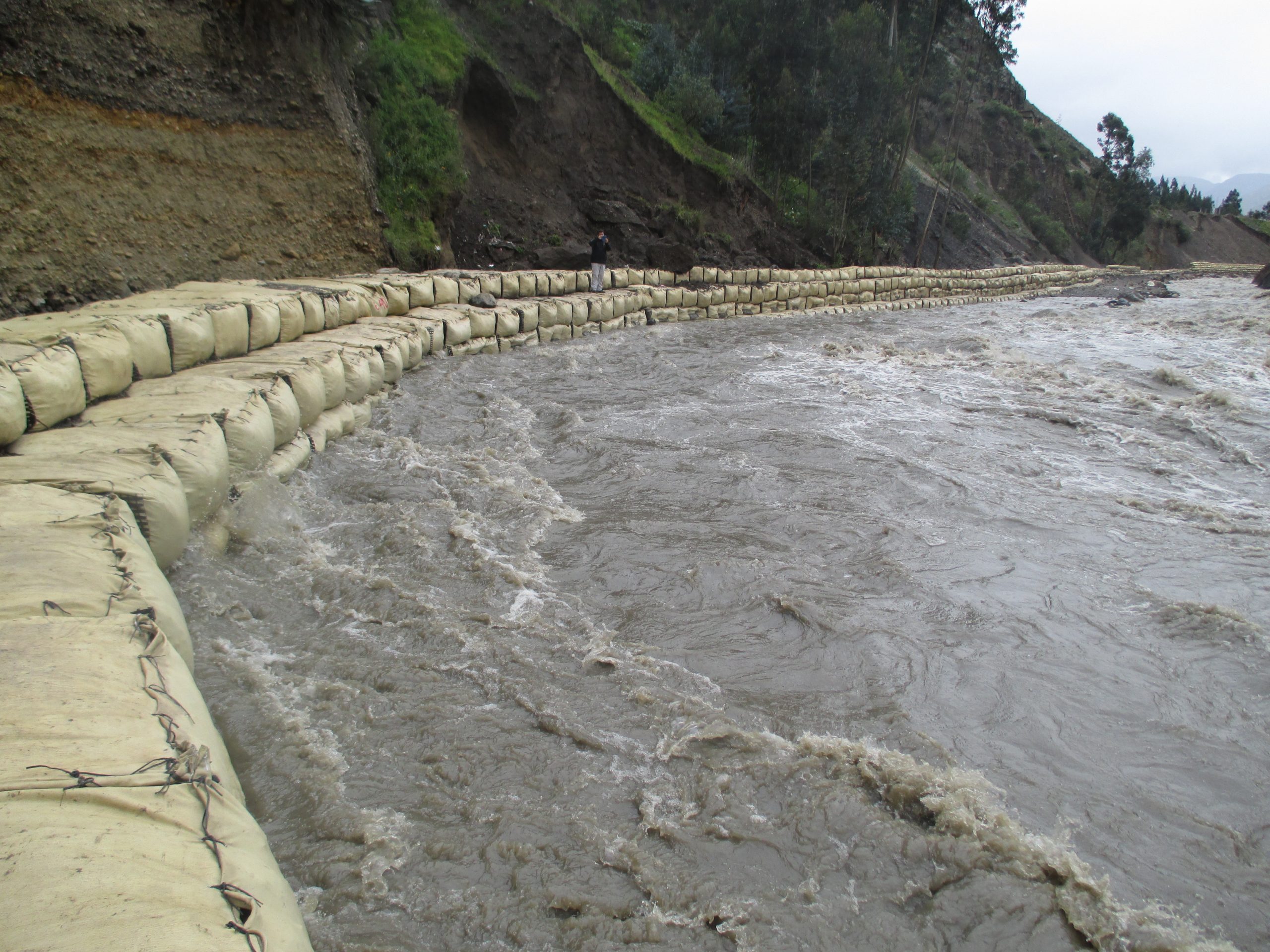
Image 3: Geocontainers for energy dissipation and riverbank protection.
Hydraulic Adaptability
Its flexible nature allows it to absorb deformations caused by differential settlement or changes in the river channel, maintaining the integrity of the system without causing brittle failure.
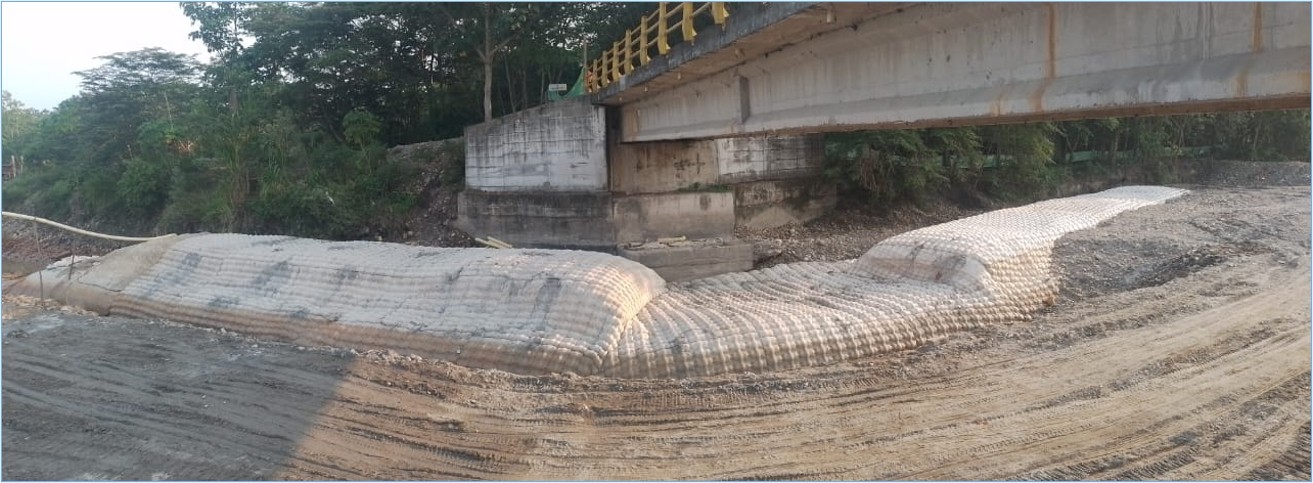
Image 4: Adaptation to the river channel.
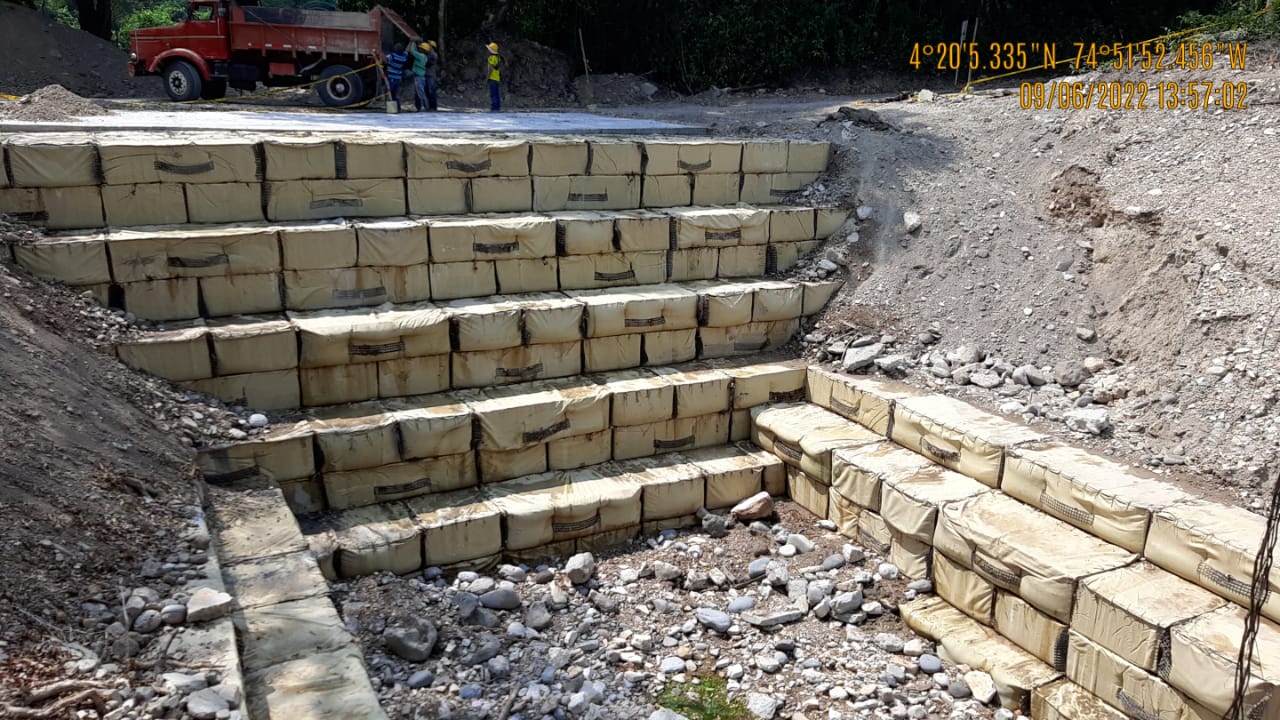
Figure 5: Tiered structure.
Advantages Over Conventional Solutions
Compared to traditional alternatives such as rockfill or massive concrete structures, geocontainers offer significant technical and construction benefits:
- Faster installation.
- Eliminates the use of stone materials from quarries.
- Reduction in transportation and logistics costs.
- Excellent performance in the face of differential settlement.
- A smaller environmental footprint and a reduction in emissions associated with rock transportation.
- Ability to work in hard-to-reach areas.
- Compatibility with bioengineering and environmental restoration solutions.
These advantages make geocontainers a highly competitive alternative for hydraulic mitigation and restoration projects.
The Importance of Specialized Hydraulic Design
The success of a project using geocontainers depends not only on the product, but also on the development of an appropriate hydraulic design.
Variables such as:
- Flow rate.
- Shear stress.
- Potential depth of undercutting.
- Sediment transport.
- Channel geometry.
- Design flood level.
- Geotechnical conditions of the riverbank.
must be evaluated to ensure safe performance throughout the structure's service life.
A properly designed solution optimizes the size, layout, and configuration of geocontainers, ensuring hydraulic stability even during extreme events.
Experience in Hydraulic Solutions Using Geosynthetics
In GEOMATRIX We develop comprehensive solutions for water resources projects, combining specialized engineering, hydraulic modeling, and advanced geosynthetic technologies.
Our systems for Geocontainers They have been implemented in riverbank restoration, erosion control, and scour control projects, providing technically reliable and sustainable solutions tailored to the specific conditions of each river channel.
Because every river behaves differently, at GEOMATRIX we design solutions based on hydraulic, geotechnical, and construction criteria that maximize the performance of our projects and optimize our clients' investment.
Conclusion
Severe erosion and scouring continue to be among the main causes of damage to hydraulic infrastructure. The use of geocontainers provides a modern, flexible, and high-performance solution to control these processes, increasing the stability of riverbanks and reducing the risk associated with extreme hydrological events.