





Reducing pavement thicknesses with geogrids
Reducing pavement thicknesses is one of the main technical and economic objectives in the design of road structures. In the design of pavements, one of the main technical and economic objectives is to achieve efficient structures to support the projected traffic with the lowest possible consumption of materials.
Traditionally, the increase in the number of equivalent axles is compensated by increasing the thickness of the granular or asphalt layers, which has a direct impact on construction costs.
However, the thickness reduction can be achieved through the incorporation of high modulus woven biaxial geogrids made of polyester. These, through their reinforcement mechanisms, increase the structural capacity of the system and allow an increase in the number of allowable load cycles.
This benefit is quantified by the TBR (Traffic Benefit Ratio), This parameter reflects the increase in the service life of the reinforced pavement compared to a non-reinforced pavement.
Why increasing thickness is not always the best solution?
The increase in thickness implies:
-
Increased consumption of granular material
-
Increased transportation and placement costs
-
Longer execution times
-
Increased environmental footprint
-
Increased weight of the structure, especially critical in soft, compressible subgrades
From the structural point of view, the objective should not only be to “thicken” the structure, but to to make it more efficient.
How do high modulus woven geogrids perform?
Polyester woven biaxial geogrids function as structural reinforcement elements within granular layers, particularly the interface between the base and granular subbase or between the granular subbase and the subgrade. Thanks to their high strength, durability and adequate behavior against cyclic loads, they are an efficient solution to improve the mechanical performance of the granular system. The reinforcement mechanisms include:
Lateral restriction
This mechanism occurs when the geogrid limits the horizontal displacement of soil particles, stabilizing the granular structure.
This phenomenon develops through two types of soil-geogrid interaction:
Passive resistance transfer (locking of the aggregate)
When a load is applied to a reinforced granular layer, the aggregate particles attempt to move laterally. However, when they encounter the openings in the geogrid, they position themselves within them, generating a “mechanical anchorage”.
This effect, known as aggregate interlocking, allows the particles to be partially confined, improving the stability of the system (see Figure 1).
Frictional transfer
It corresponds to the friction between the soil particles and the geogrid straps. As the soil is subjected to shear stresses, part of the load is transferred by this friction at the soil-geosynthetic interface.
The width of the straps and the surface of the polyester fabric favor this interaction, increasing the load capacity of the system (see Figure 1).
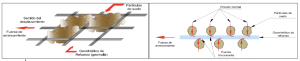
Figure 1. (a) passive resistance transfer (b) friction transfer.
What is tbr and how can it be used to optimize thicknesses?
He Traffic Benefit Ratio (TBR) is the ratio between the number of load cycles that a reinforced pavement withstands and the number of cycles that an unreinforced structure withstands under the same conditions.
A TBR greater than 1 indicates an increase in the structural life of the pavement.
In practical terms:
-
If the geogrid increases the allowable cycles, it is possible to maintain the same service life with lower thicknesses, o
-
maintain the thickness and increase the service life of the pavement
This approach optimizes structural design without compromising performance.
Why use high modulus polyester woven geogrids?
Polyester woven biaxial geogrids feature:
-
High stress-strain modulus under static loading
-
Low long-term deformation (low creep)
-
High cyclic modulus in tension at permanent deformations
-
Mechanical protection against damage during installation
The use of these geogrids allows reducing the thickness of granular layers without compromising structural performance, This translates into savings in materials, transportation and construction time.
Conclusion
Thickness reduction in a pavement structure is not only based on reducing materials, but also on increase the structural efficiency of the system.
The high modulus polyester woven geogrids, through mechanisms such as the lateral restraint, the tensioned membrane effect and increased bearing capacity, The TBR is used to increase the number of load cycles that the structure can withstand, a parameter that is quantified by the TBR.
In addition, they contribute to control the occurrence of permanent deformations (rutting) thanks to their high performance under cyclic loads.
This increase in structural capacity makes it possible to optimize thickness and construction costs without compromising the performance and durability of the pavement, consolidating itself as one of the most important structural elements of the pavement. efficient and reliable technical solution in road projects. This approach has been documented in international guidelines such as those of the Federal Highway Administration (FHWA).