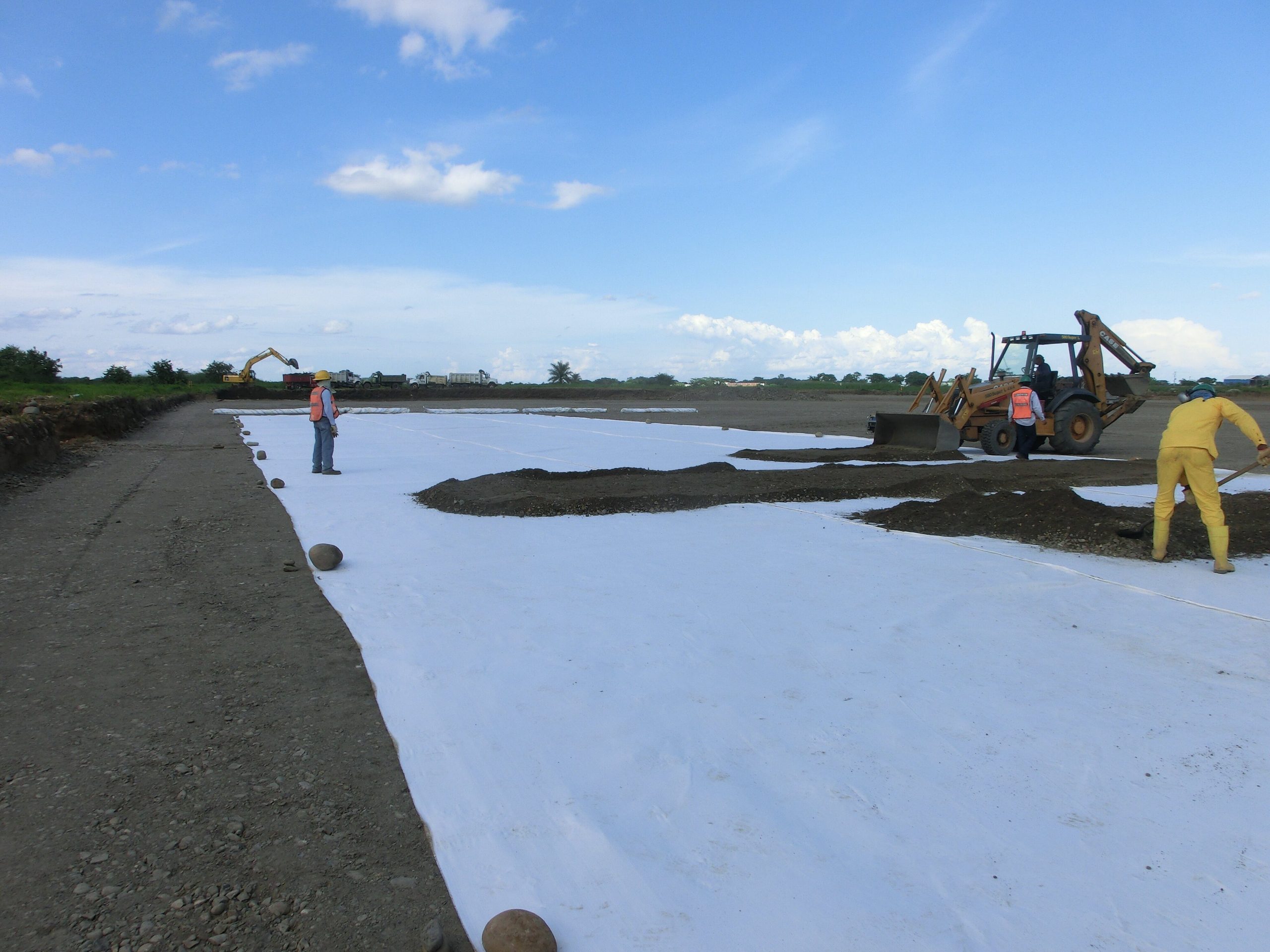


5 TIPS TO IMPROVE SUBGRADE SOILS WITH GEOTEXTILES
5 Tips to Improve Subgrade Soils with Geotextiles
Soil improvement with high modulus geotextiles is an efficient technique in the construction of roads and other structures, such as foundations, reinforced soil walls or embankments. Geotextiles are permeable materials that, when integrated with the soil, provide several specific functions in civil works such as reinforcement, stabilization, separation, filtration, drainage, containment and erosion control, several of which are performed simultaneously. Here are five tips for improving subgrade soils with geotextiles.
1. Selection of Suitable Type of Geotextile
Geotextiles come in different materials and configurations, such as woven and non-woven. For the stabilization of subgrade soils, it is crucial to select the type of geotextile that best suits the specific needs of the project. FORTEX BX high modulus polyester woven geotextiles guarantee a fast response in tension to soil deformations and stability in hydraulic performance at any level of tension or confinement, fulfilling all the necessary functions for soil improvement with geotextiles. The following is the recommended use of the different references of FORTEX BX geotextiles according to the CBR of the subgrade.
Table 1. References to FORTEX BX geotextiles according to soil CBR value.
| CBR (%) | Geotextile type |
| < 0.5 | FORTEX BX 2220 |
| 0,5 - 0,8 | FORTEX BX 1330 |
| 0,8 - 1,5 | FORTEX BX 1090 |
| 1,5 - 2,5 | FORTEX BX 760 |
| 2,5 - 3,0 | FORTEX BX 650 |
2. Land Preparation and Leveling
Prior to geotextile placement, proper soil preparation is crucial for effective geotextile ground improvement. Removing debris, roots and leveling the soil ensures uniform placement of the geotextile, minimizing the risk of damage during installation and optimizing its performance.
3. Correct Installation and Anchoring of the Geotextile
Maximizing the effectiveness of the geotextile is fundamental to soil improvement with geotextiles. Unrolling the geotextile smoothly and properly overlapping the rolls ensures continuity of reinforcement and separation. Anchoring the edges with stakes or metal rods prevents displacement during construction, adapting the overlaps to the CBR of the subgrade soil.
4. Consider the Appropriate Coverage Layer
Apply a post-geotextile granular layer, of adequate thickness and material, to improve the distribution of loads on the subgrade soil. Design according to project specifications and soil and geotextile characteristics, consulting design guidelines for subgrade improvement and reinforcement layers with FORTEX geotextiles. In addition, the placement method should be adapted to the compressibility and/or strength of the subgrade soil, as detailed in the FORTEX Geotextile Installation Guide for subgrade reinforcement.
5. Maintenance and Monitoring
Regular maintenance ensures the long-term performance of the geotextile, which is vital for soil improvement with geotextiles. Periodically inspecting for displacement or deformation allows problems to be corrected before they become failures. Ensuring operational drainage and underdrainage systems prevents water accumulation, protecting the integrity of the geotextile and subgrade soil.
Implementing these tips significantly improves the stability and durability of subgrade soils using geotextiles, facilitating the improvement of soils with geotextiles and optimizing the efficiency of structures built on them.