




WORK CASE – CONSTRUCTION OF PARKING CYCLE WITH GEOTEXTILE
The use of geotextiles in urban planning simplifies construction processes, making better use of available soils and materials and even construction and demolition waste.
In this blog we will see a case of a construction site where the use of geotextiles in urban planning, specifically woven geotextiles and geogrids, eliminated conventional lateral confinement elements such as retaining walls, confining beams and curbs or piles, avoiding the use of materials such as concrete, steel and complementary activities.
GENERALITIES:
This involved the construction of an area for cycle parking using an articulated pavement, adapting the existing ground up to the foundation level where a layer of woven geotextile was placed. FORTEX for subgrade soil separation and stabilization. This example of the use of geotextiles in urban planning shows how available resources can be optimized. GEOBRICK structural geocontainers filled with excavated soil were used for the perimeter confinement of the area. In some sectors, fragments of brick and common material were used for the fillings, which were finally arranged and compacted adequately to achieve the required stability. A biaxial geogrid was used over the entire area. GEOESTERA 50 to increase the load-bearing capacity and reduce possible surface deformations. The end of the geogrid was used to form a curb in pavers confined with the mesh. Finally, a 5 cm layer of sand was placed on top of a layer of clay pavers, as shown in the following detail.
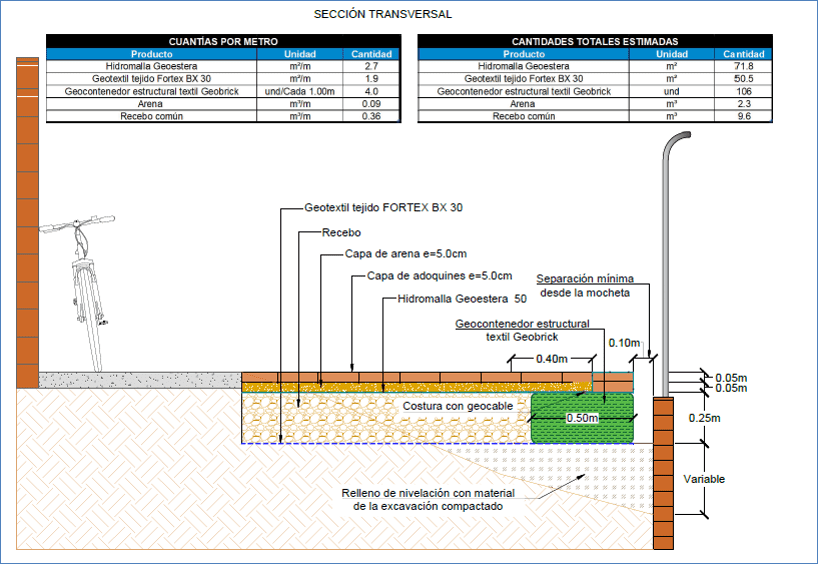
Used materials:
GEOTEXTILE FORTEX BX 30:
- The woven geotextile initially allowed a separation of the site material from the forming material. In addition, its inclusion in the structure reinforced and mitigated the migration of fines through the GEOBRICK joints.
- woven geotextile FORTEX BX 30, The geotextile, due to its strength, stabilized the subgrade, mitigating possible differential settlements and guaranteeing a homogeneous distribution of loads to the subgrade. This aspect is crucial in the use of geotextiles in urban planning.
- The contribution of the geotextile (confinement and reinforcement) allowed the fillers used to be materials from brick waste, thus optimizing the use of geotextiles in urban planning for a more sustainable construction.
GEOBRICK STRUCTURAL GEOCONTAINER:
- It allowed the use of material from the site to achieve a perimeter confining structure, containing the fill and allowing rapid progress in the shaping of the platform. This is another example of the efficient use of geotextiles in urban planning.
HYDROMEGREEN GEOMETRIC GEOESTERA 50:
- It was used to confine the fill and the final paver structure, thus avoiding the use of conventional alternatives such as concrete beams and piles. This case demonstrates how the use of geotextiles in urban planning can replace traditional methods, offering more sustainable and economical solutions.
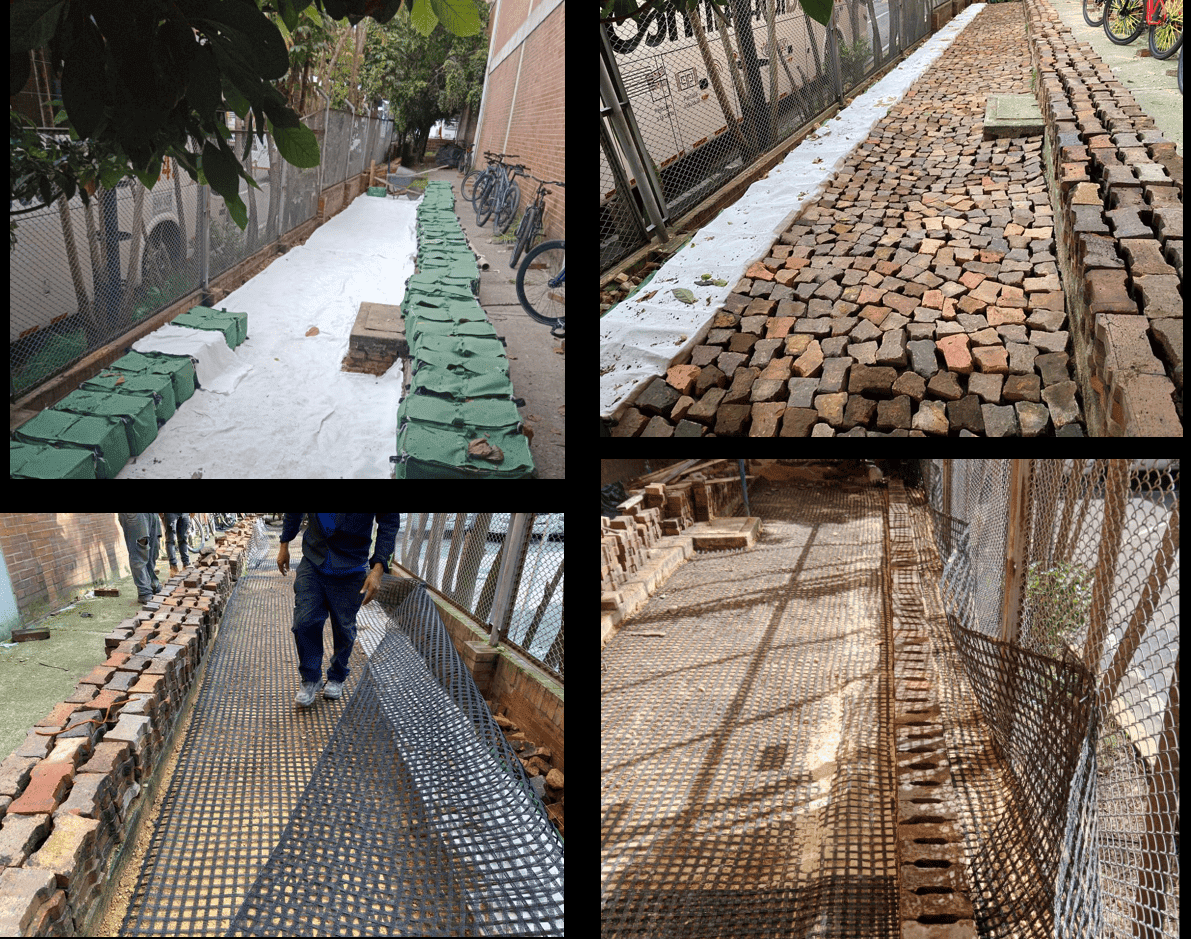
Photographs 1 to 4 show the placement of the geotextile and the geobrick, the one filled with brick fragments and the confining curb formation in confining brick with the geogrid
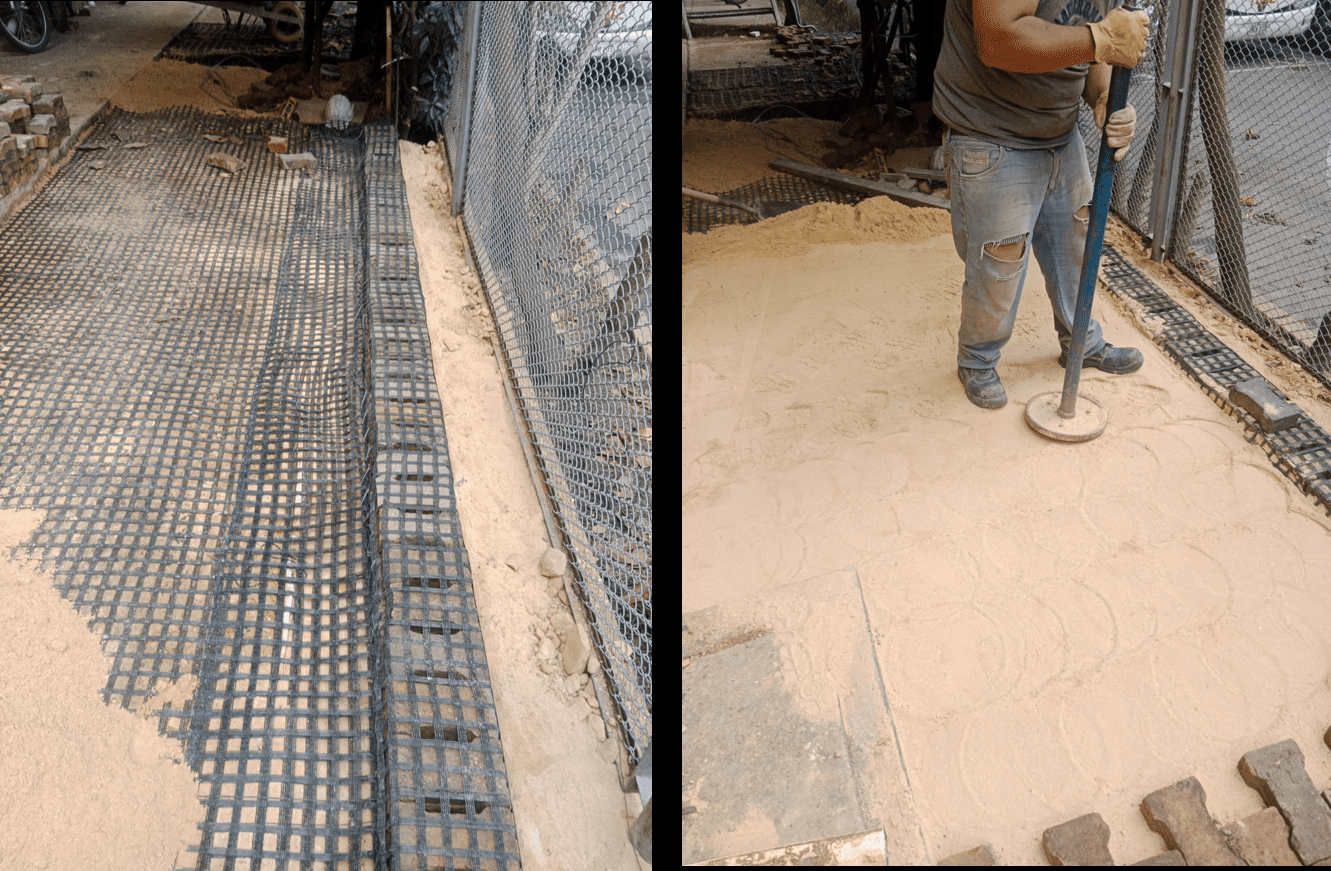
Photographs 5 and 6. The finished curb can be seen. The geogrid sewn together manual with Geocable. It also shows the placement of the sand to seat the paving stone.
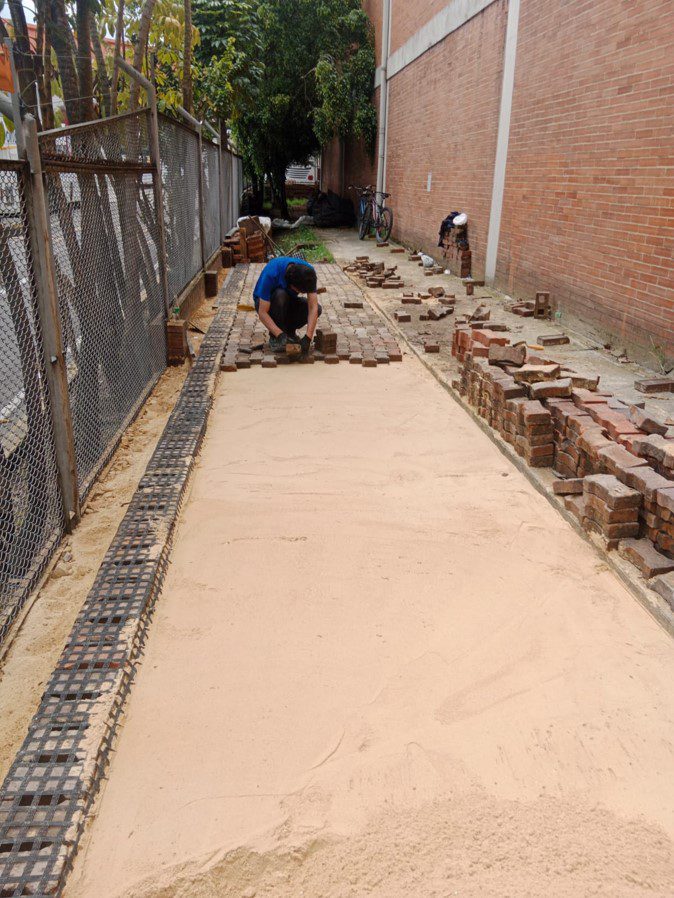
Photograph 7. Paving stone placement
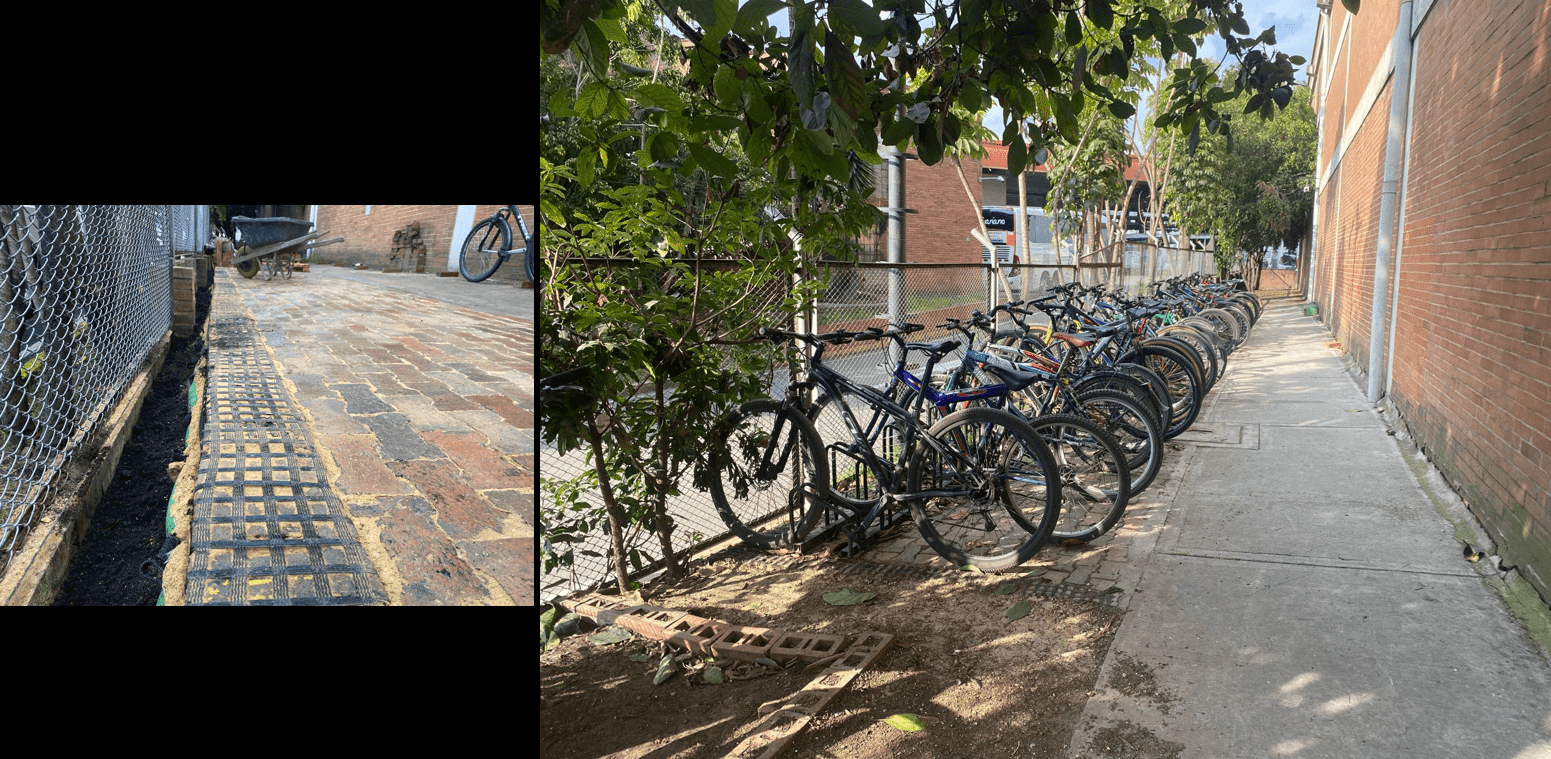
Figure. Final stage of the process. Cobblestone confined with the curb. Finished pavement