





HOW TO INSTALL A GEOGRID REINFORCEMENT FOR GRANULAR LAYERS?
The optimal performance of pavement structures built with geosynthetics depends on proper installation and maintenance practices. The installation of FORTGRID geogrid for granular reinforcement is a key process in the construction of roads and other structures where the stabilization of granular layers is required, improving load-bearing capacity and extending the structure's service life. The general steps for performing the installation of FORTGRID geogrid for granular reinforcement:
Surface Preparation:
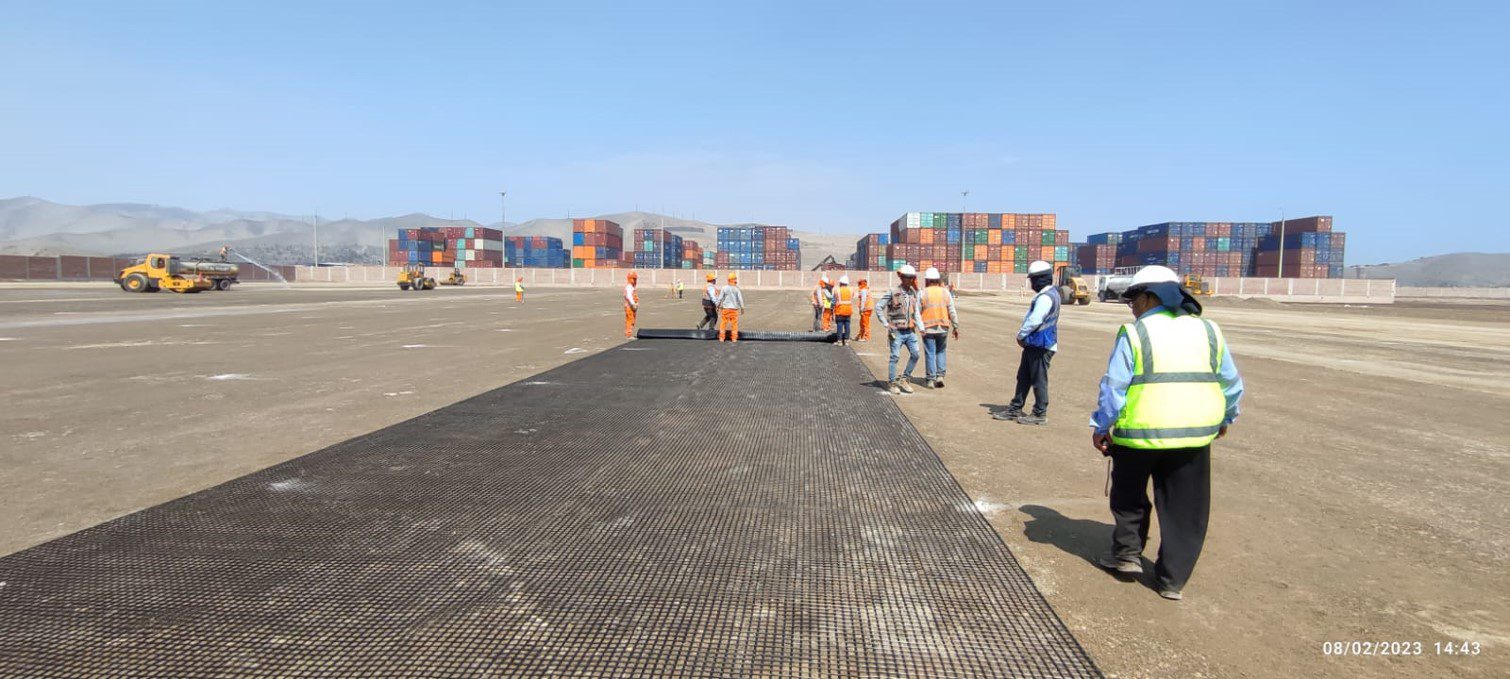
The installation of FORTGRID geogrid for granular reinforcement This work must be performed on the surface of the leveled and compacted granular layer. It is recommended to remove any protruding material resulting from the grading of the granular layer.

2. Installation of the geogrid:
The geogrid FORTGRID BX It should be unrolled and installed in the direction of construction progress, aligning the rolls parallel to the track axis. If multiple rolls are needed to cover the required width, they must be overlapped. The geogrid installation FORT for granular reinforcement should be made with the geogrid tensioned, avoiding wrinkles and ensuring full contact with the bottom surface.
3. Securing the geogrid:
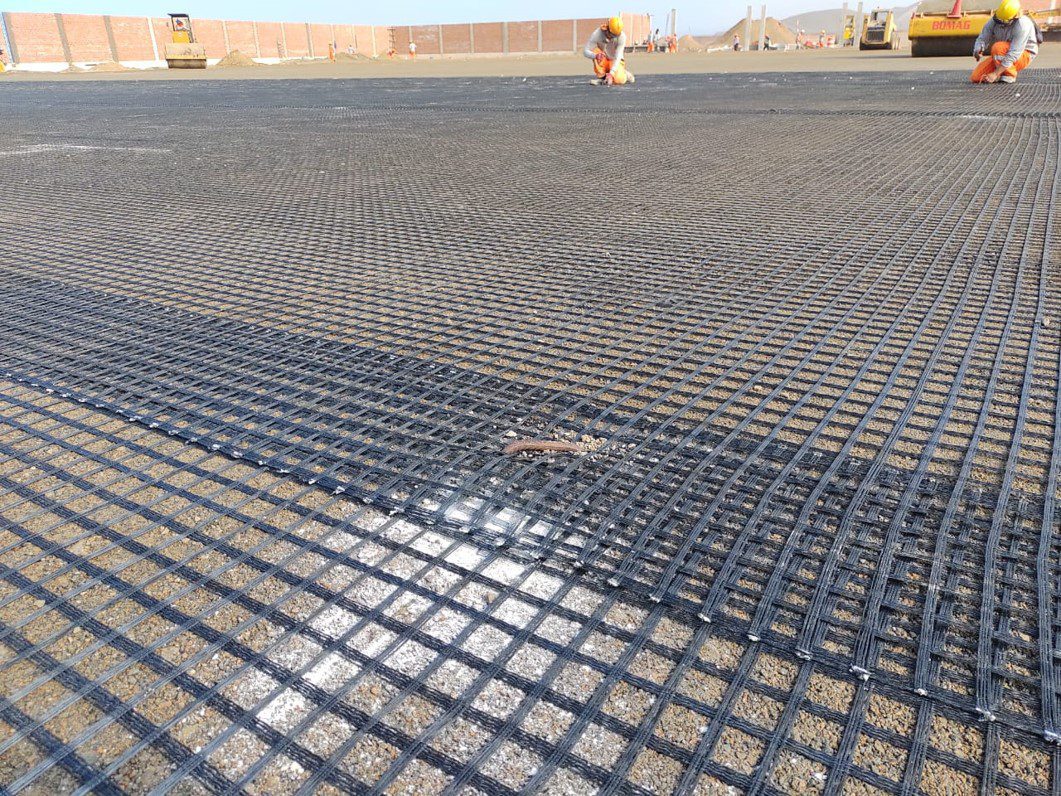
At the start of the roll, the crosswise edge must be secured to the surface with 10 x 10 x 10 cm U-shaped metal staples made of 6.4 or 9.5 mm (1/4“ or 3/8”) steel rod approximately every meter. Additional clips or anchor pins may be placed along each strip, securing the centerline and edges or the overlap area every 1.5 m and wherever deemed necessary to ensure that the geogrid remains stable, taut, and wrinkle-free during installation. The number of anchors will depend on soil conditions and project requirements.
4. Placement of the Granular Material Layer
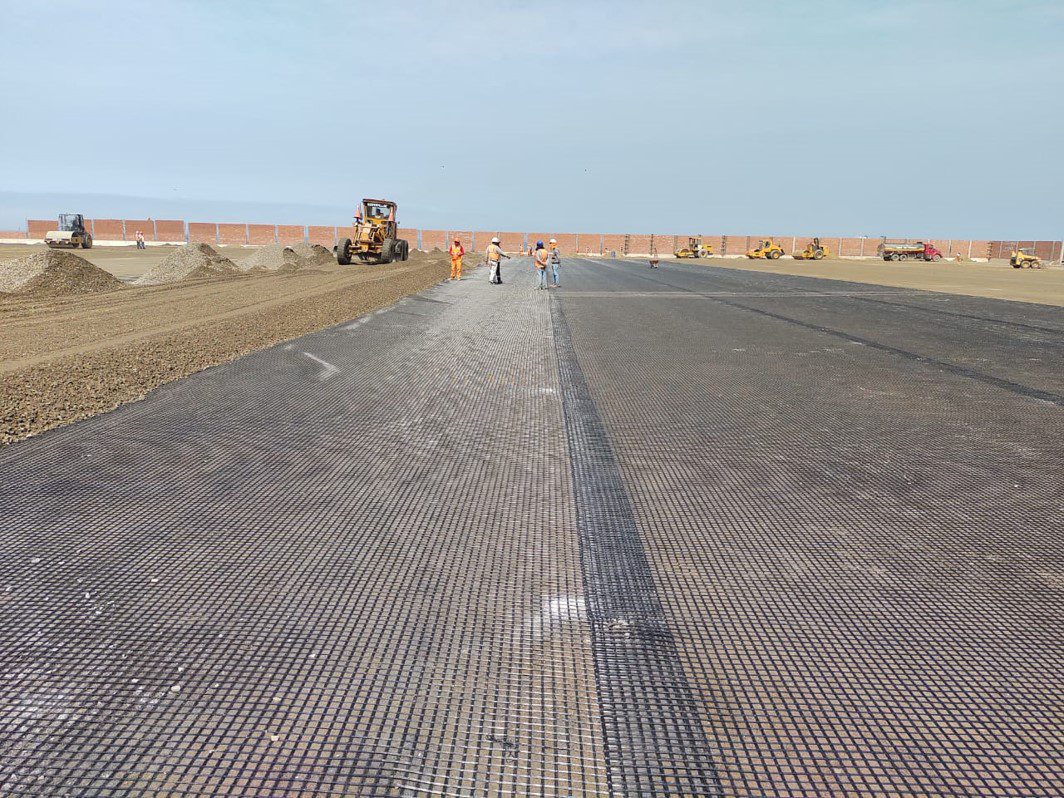
The use of geogrids FORT BX This does not affect the procedure for laying the granular material layer. The granular material should preferably be spread using front-end loaders such as motor graders, loaders, or bulldozers, taking care not to damage it. The geogrid exhibits good resistance to installation damage; however, the passage of construction equipment over the geogrid is not recommended. If wrinkles or folds occur, the geogrid must be tensioned as the placement of the granular material progresses. Finally, the granular material is compacted to achieve the specified density, to ensure proper integration with the geogrid and improve its structural performance.
Special Recommendations
- It is recommended to periodically check the thickness of the granular material to ensure that the layer thickness meets the design specifications.
- While it is true that anchoring with mechanical fasteners facilitates installation, the performance of the structure depends to a greater extent on the quality, angularity, and degree of compaction of the granular material from which it is made.
- Density measurements of the compacted layer shall be performed using conventional methods in accordance with the provisions of the applicable construction specification.
- As a general guideline, granular material should be compacted to achieve a density of 95% of that obtained in the Modified Proctor test. The density of the material will gradually increase as the layer of soft, compressible soil is penetrated.
- It is always recommended to follow the guidelines provided in the installation guide for biaxial geogrids FORT.
Proper installation of a geogrid reinforcement for granular layers is crucial to ensuring its effectiveness in the project. By following these steps and taking the specific recommendations into account of GEOMATRIX, you can ensure a proper and long-lasting installation.