

FORTGRID ASPHALT GEOMETRIC FOR REFLECTION CONTROL OF CRACKING IN ASPHALT LAYERS
Problem:
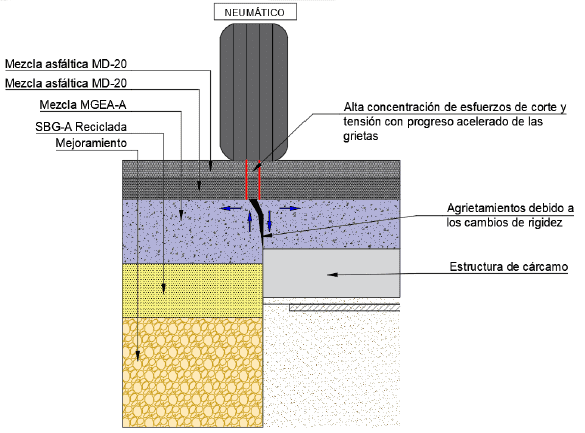
As a result of installing pipe protection chambers along a pavement structure, changes in stiffness occur due to the installation of a reinforced concrete slab on the support platform of the designed pavement. When the asphalt layer is placed on a surface prone to cracking or changes in stiffness, the stresses and deformations generated by passing vehicles can rapidly propagate toward the wearing course. This is where geogrids for crack control play a crucial role (see Figure 1).
Solution:
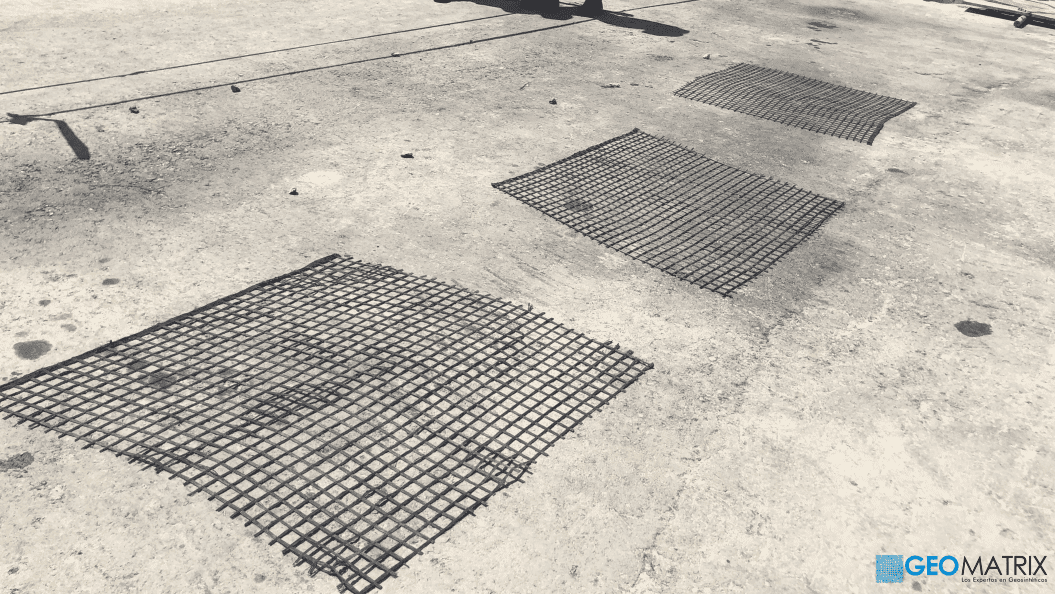
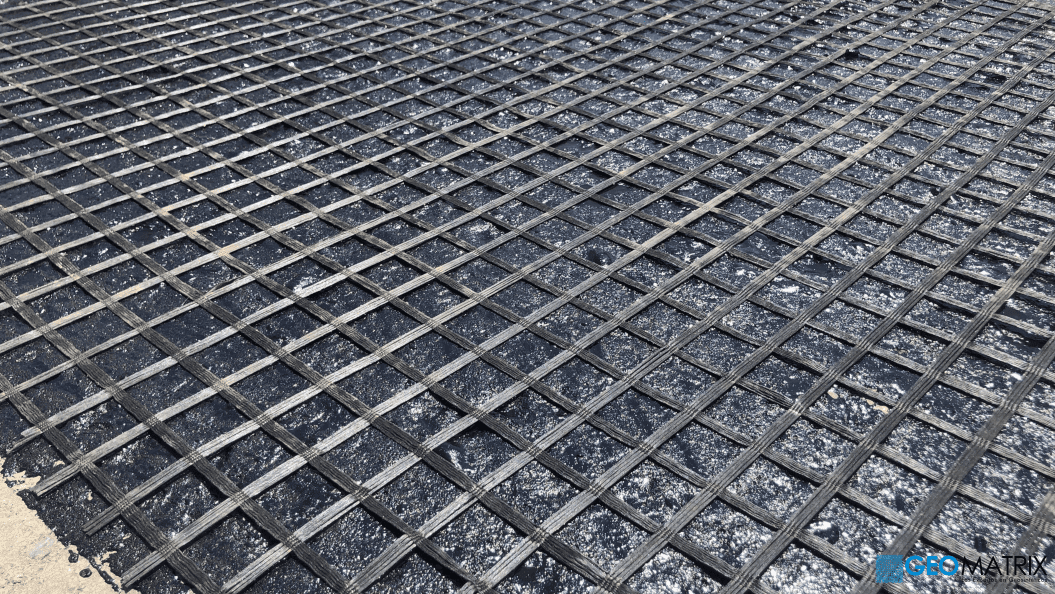
Due to the changes in stiffness, it is recommended to implement a geogrid type FORTGRID ASPHALT in order to control the transmission of discontinuities that occur at the granular level due to these changes in stiffness. The installation of a geogrid FORTGRID ASPHALT Between asphalt layers, or between an asphalt base and an asphalt layer, this creates a biaxial distribution of the aforementioned stresses across its plane, thereby expanding the thin load-bearing prism into one with greater volume, which provides greater mechanical capacity to withstand the stresses that arise.
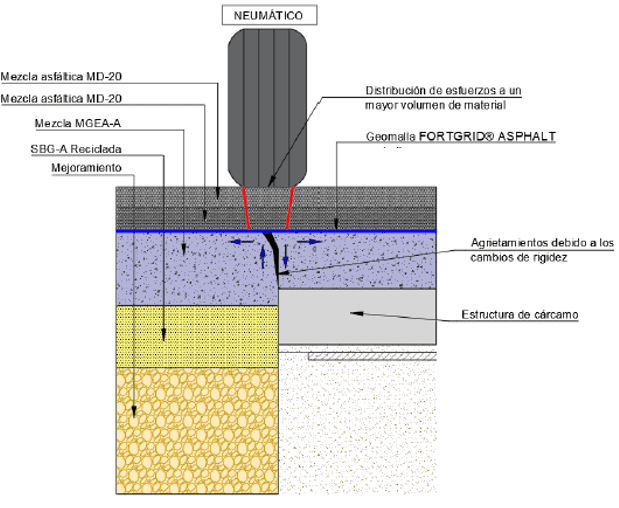
The geogrid FORTGRID ASPHALT It reinforces the lower layer of the asphalt overlay, allowing direct contact between the materials through its openings, thereby structurally bonding and reinforcing the asphalt layers. This effect redirects the path of shear forces and distributes the stress over a larger mass of material.
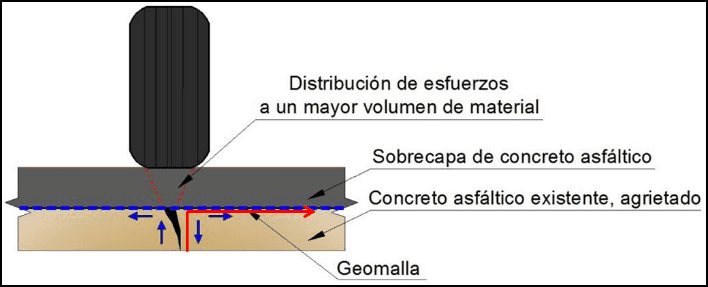
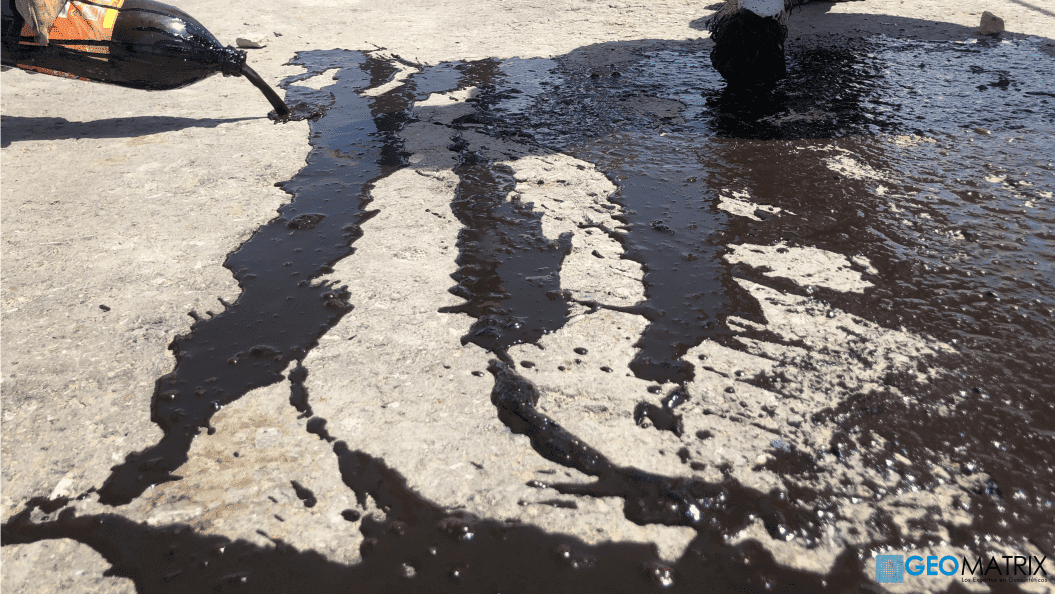
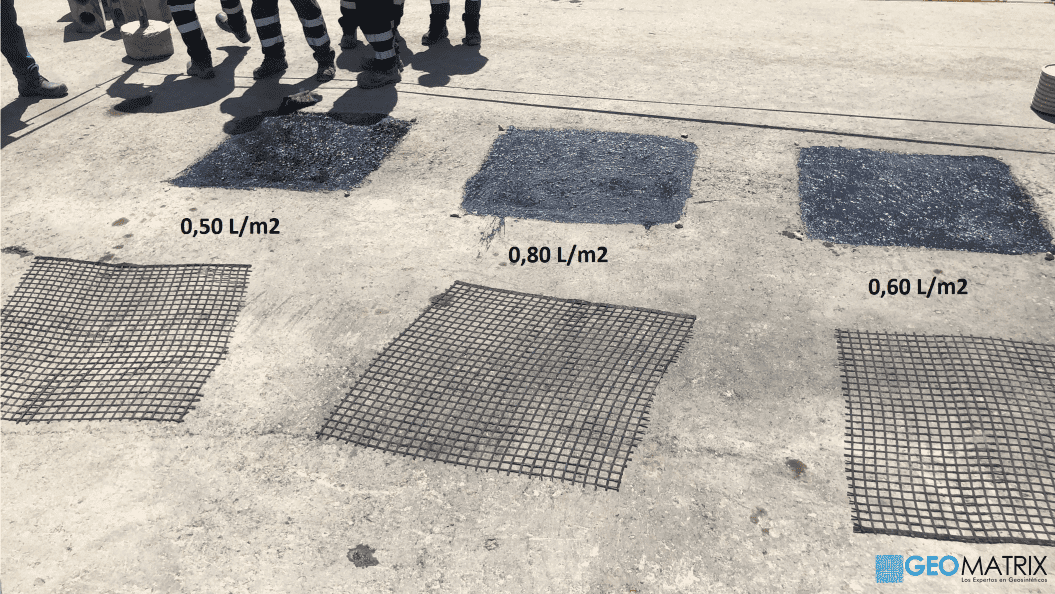
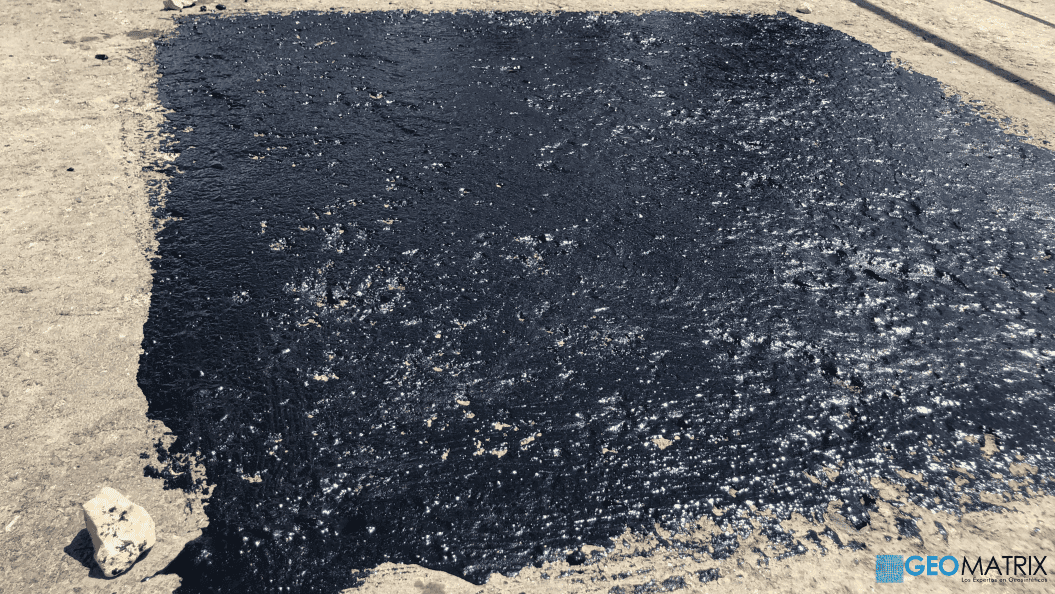
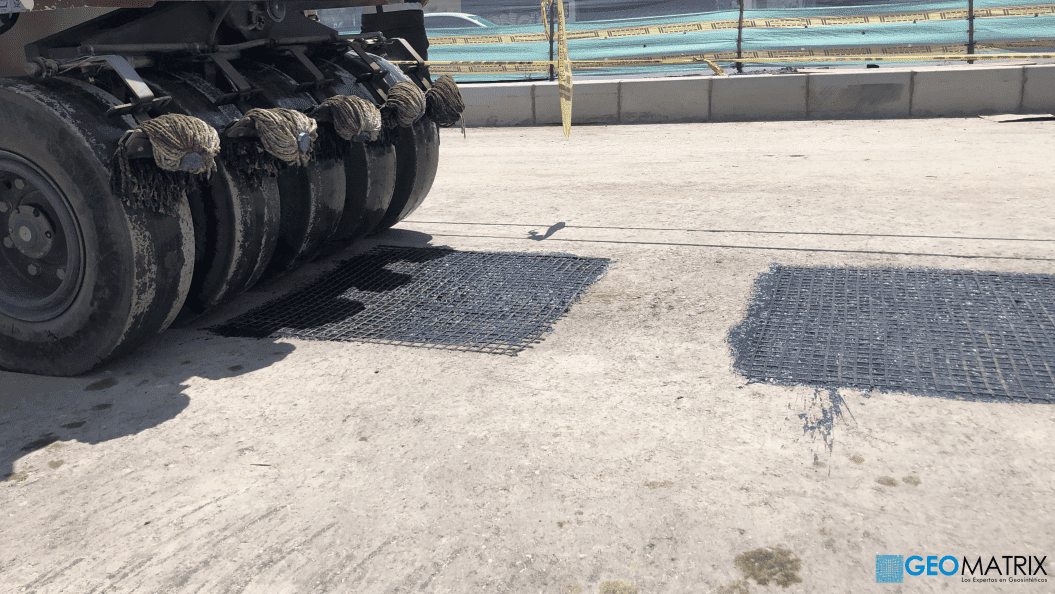
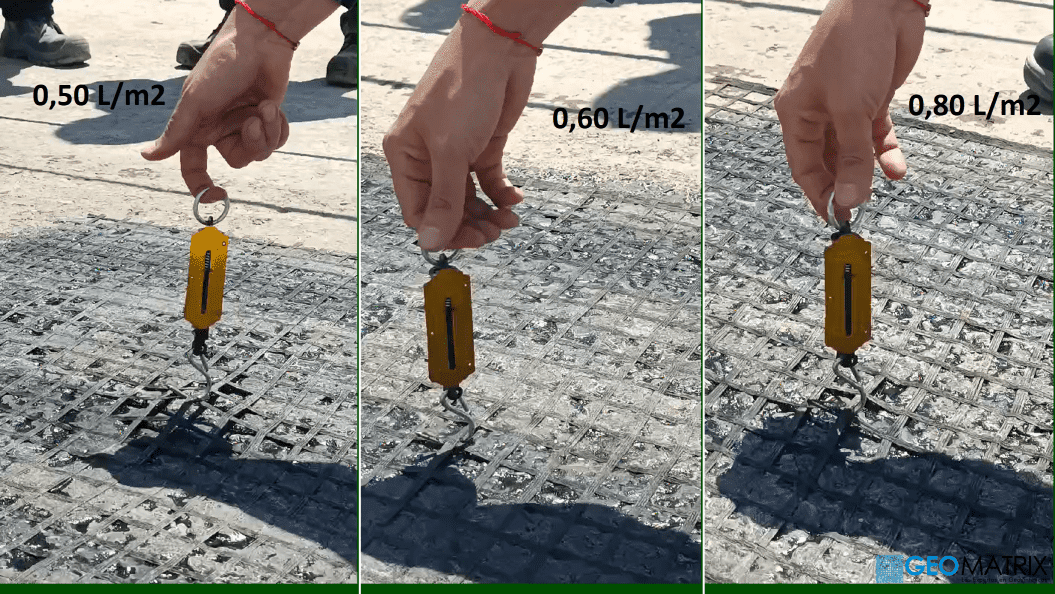
Thanks to their resistance to cyclic loading, high temperatures, and minimal installation damage, FORTGRID ASPHALT geogrids are an advanced alternative for reinforcing asphalt overlay layers. Their superior resistance to cyclic loading results in a significant improvement in resistance to reflective cracking. Furthermore, their balance between open area and strength provides high shear strength (adhesion) at the interface, ensuring long-term performance of the overlay layers. Geogrids for control of cracks They can be installed on any type of surface, ensuring the necessary adhesion. The amount of binder emulsion required should be determined through an on-site adhesion test by varying the amount of asphalt binder. It is recommended to use a fast-breaking cationic asphalt emulsion. The adhesion test should be conducted to determine the emulsion’s break time and the optimal dosage, which is the one that yields a pull-off resistance of 5.0 kg or greater.
Adhesion test: