





Geosynthetics in Pavements: Functions and Benefits
What is the function of geosynthetics in pavements?
In the design and construction of durable, efficient, and sustainable road infrastructure, the geosynthetics in pavements have established themselves as strategic allies of modern engineering.
The use of these materials improves structural performance, optimizes the use of traditional materials and prolongs the useful life of road works.
Its incorporation responds to technical criteria oriented to:
-
Deformation control
-
Water management within the structure
-
Reduce deterioration mechanisms associated with traffic and the environment.
A pavement is subjected to repeated loads, thermal variations and the presence of moisture. In this context, geosynthetics fulfill specific functions within the multilayer system, improving its mechanical behavior.
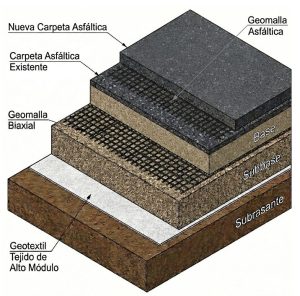
Functions of geosynthetics in a pavement structure
The applications of the geosynthetics in pavements are classified according to their primary functions, although they may perform secondary functions simultaneously.
The main functions are: separation, reinforcement, filtration, drainage and crack control.
1️⃣ Separation function
The geosynthetic placed between two different materials avoids their mixing or contamination, preserving their integrity and structural thickness.
Example:
Geotextiles used to prevent subbase materials from penetrating the subgrade.
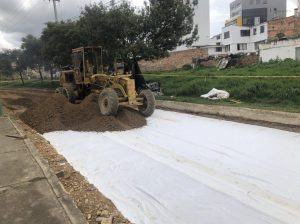
2️⃣ Booster function
Geosynthetics develop tensile forces that help control deformations, especially in soils with low bearing capacity.
Examples:
-
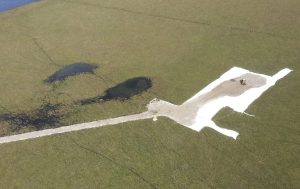
High modulus geotextiles reinforcing soft subgrades by means of a tensioned membrane effect.
-
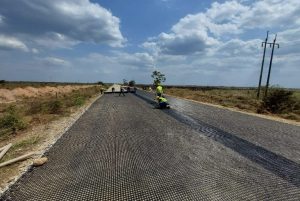
Biaxial geogrids that reinforce the granular base by interacting with the aggregate
.
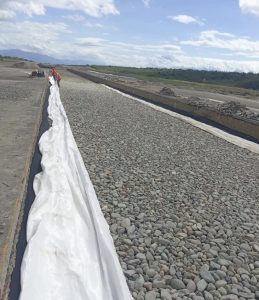
3️⃣ Filtration function
They allow water to pass through while retaining fine particles, preventing soil washing.
Example:
Geotextiles that prevent soil migration into drainage systems without affecting hydraulic flow.
4️⃣ Drainage function
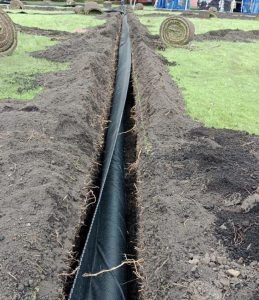
They facilitate the flow of liquids or gases in the plane of the material, allowing the evacuation of water within the pavement structure and reducing moisture accumulation.
Example:
Drainage geocomposites used to lower the water table under the road structure.
5️⃣ Crack reflex control
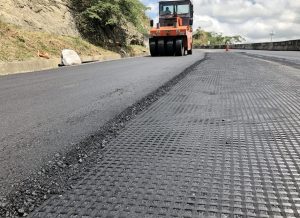
Geosynthetics installed in asphalt layers help absorb tensile stresses, slowing the propagation of cracks into the overlay.
Example:
Asphalt geogrids installed over cracked surfaces to prevent cracks from reflecting on the new layer.
Conclusion
The incorporation of geotextiles, geogrids and asphalt geogrids in pavements represents an effective solution to improve structural performance, control deterioration and optimize resources.
The correct selection, design and installation of geosynthetics in pavements is key to achieving more durable, efficient and sustainable structures.