





Geosynthetics in WWTP: sludge lagoon adaptation
The adaptation of the sludge lagoon of the WWTP Rio Frio with geosynthetics was a necessary solution to the challenges of trafficability in unstable areas. Wastewater treatment plants (WWTP) such as this one face technical challenges when heavy machinery is required to constantly pass over soft surfaces. In this project, executed in Santander, geotextiles and geocells were used to reinforce the ground and ensure safe and efficient traffic.
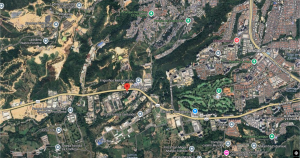
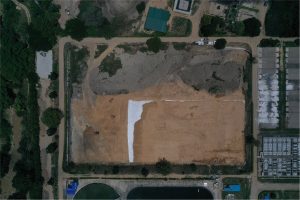
Location map of the Río Frío WWTP in Santander.
The challenge: transit in an unstable area
PTAR Río Frío uses compost to stabilize sludge, which generates a weak surface that is unsuitable for vehicular traffic. This affected maintenance operations and the transfer of stabilized waste.
Technical solution: soil reinforcement with geosynthetics
Applied materials:
-
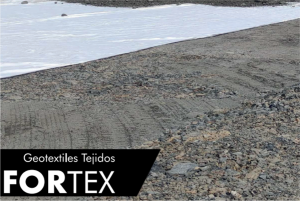
FORTEX BX 760: High modulus woven geotextile for soil reinforcement.
-
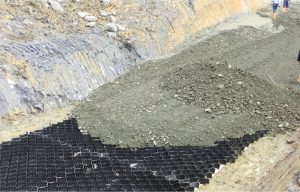
CONFICELL LS 125: Cellular confinement geocell to distribute loads.
Stages of execution
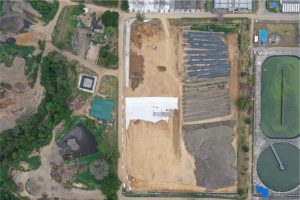
Site preparation: First, the biosolid was removed and the surface was prepared for installation.
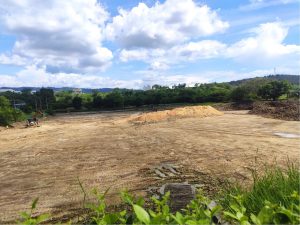
Cleaning and leveling of the intervention area.
2. Stockpiling of materials and cutting: The geotextile rolls were stored and identified for their correct disposal on site.
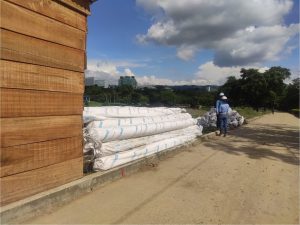
(FORTEX BX-760)
3. On-site training: The technical personnel were trained in double pass "J" sewing, ensuring a correct joining of the panels.
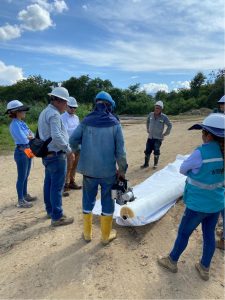
Technical field training for geotextile installation.
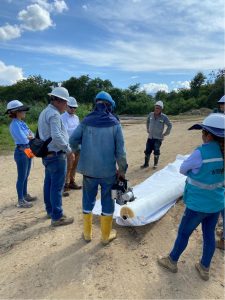
On-site training (April 7, 2025)
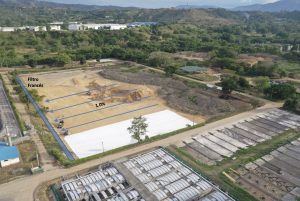
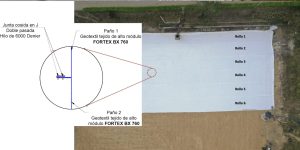
4. Installation of geosynthetic reinforcement: Geotextiles and geocells were installed in the intervention zone.
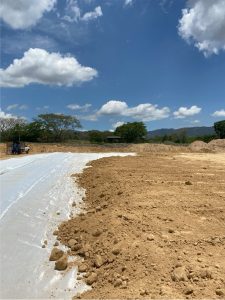
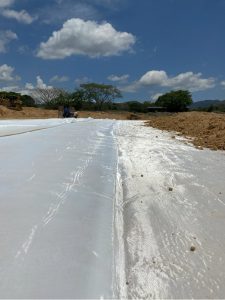
5. Compaction of granular layer: The top layer was compacted to distribute loads uniformly.
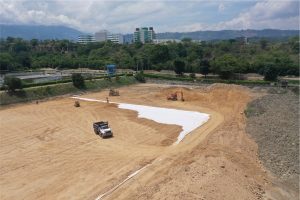
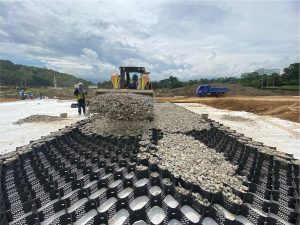
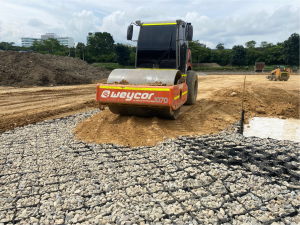
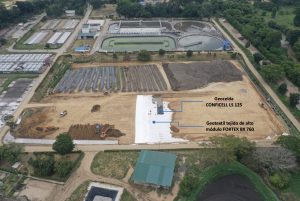
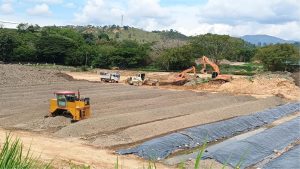
This type of solution allows the safe transit of heavy machinery on soils with low bearing capacity.
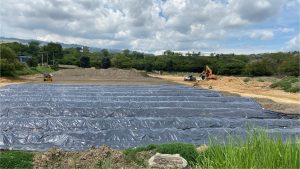
Current status of the project
Conclusion
As a result of the use of geosynthetics, the soil gained bearing capacity and allowed the safe passage of heavy machinery. As a result, maintenance and transportation operations at the plant were optimized.