




Innovative Strategies for Erosion Control in Linear Projects and Natural Slopes
The fight against soil erosion has led civil engineering to explore innovative solutions such as erosion control blankets. In this blog, we will walk through different materials and examine key strategies for erosion control, taking into account slope as a determining factor.
We begin with Impertex, a composite textile, consisting of a polyester woven geotextile impregnated with copolymer. This material exhibits impermeability and high mechanical and weathering durability properties. Its main application is in the lining of water flow control structures such as reservoirs, irrigation canals and coronation ditches, as well as large covers and sunshades for protection against rain and sun.
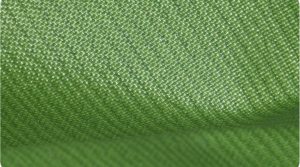
2. Biotex: Temporary erosion control blanket for moderate slopes.
Moving towards solutions for erosion control, we have temporary blankets. Biotex is presented as a slow photodegradation open weave blanket, designed to protect exposed soils in areas with slopes up to 1:1 (approximately 45 degrees), its mesh-like structure with textured transversal threads favors the transport of moisture by capillarity and plant growth. Biotex is an effective ally for erosion control on fill slopes and embankments.
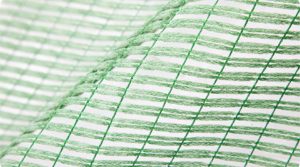
3. Terratrac: Permanent erosion control cobbles for steep slopes
Focusing on steeper slopes, Terratrac emerges as a permanent, durable, long-term outdoor mulch. Its three-dimensional mesh structure provides a porous medium that retains soil particles and allows vegetation to pass through. With its high tensile strength, durability in aggressive natural environments and UV resistance, it is a solid choice offered in TRM-15 and TRM-50 versions depending on the slope. Terratrac proves its effectiveness on cut slopes, embankments and channel linings.
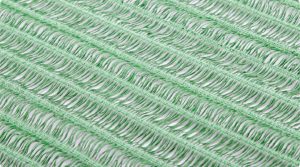
4. Geoestera: Detritus Drop Control
For rocky slopes where vegetation cover is not achieved and debris detachment by rainfall or wind action is a concern, Geoestera hydromesh stands out as a retention element thanks to its high strength and opening size. Geotextile hydromesh has reinforced nodes and a higher coating by impregnation that gives it great durability in the open air.
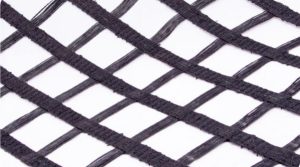
5. Conficell: Erosion control and revegetation by confinement and root support.
We enter the domain of soil protection with Conficell EC, a weather-resistant geo-composite that offers soil confinement and root support, creating stable organic layers. This is achieved thanks to the combination of a geocell and a biaxial geogrid in its lower plane, which, when assembled, allows achieving a panel of easy opening and fixation to the ground, on which the filling soil is placed, ideal for the regeneration of degraded areas.
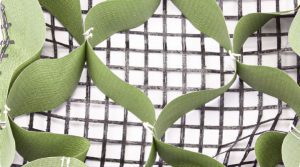
6. Geobrick: Portable geocontainer for soil confinement
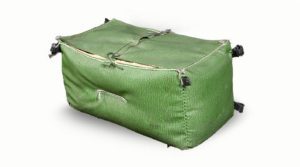
We concluded our exploration with the Geobrick, a durable outdoor geocontainer with a rectangular shape and portable size, ideal for prefabrication and transport to the site in the construction of small earthen channel channel channeling, bank enhancement and culvert encol protection works.
This review of erosion control solutions shows a portfolio of alternatives suitable for each case depending on the slope and specific soil conditions and reveals the importance of their versatility. Civil engineering, backed by these innovative alternatives, remains a tireless advocate for soil and environmental preservation.