





Horizontal and Vertical Obstructions in MSR
Reinforced soil walls (RSW) are a widely used solution in civil engineering projects due to their versatility, efficiency and capacity to withstand high loads. However, during design and construction, it is common to encounter horizontal and vertical obstructions, such as pre-existing pipes, conduits, poles or foundations. These obstructions can present significant challenges to ensuring the structural integrity and functionality of the system. In this article, we explore how to address these conditions in accordance with regulations such as those of the Federal Highway Administration (FHWA) and share best practices for handling these situations.
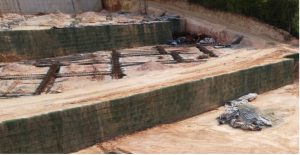
Types of Obstructions and their Implications
Horizontal Obstructions
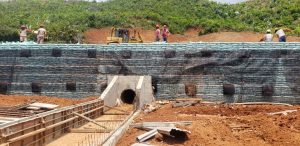
Horizontal obstructions include utility pipes (water, gas, electricity), drains or existing walls. These structures can interfere with soil reinforcement layers, affecting stress distribution and compromising stability.
Implications:
- Interruption of the reinforcement continuity.
- Stress concentration around the obstruction.
- Difficulties in the compaction of the adjacent backfill.
Vertical Obstructions
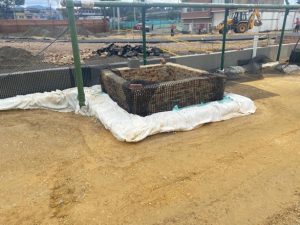
Vertical obstructions include poles, deep foundations, trees or pre-existing structures that cut through reinforced soil layers.
Implications:
- Risk of direct interference with reinforcements.
- Restrictions on the distribution of vertical loads.
- Potential structural weaknesses.
FHWA Regulations and Guidelines
The FHWA, in its "Mechanically Stabilized Earth Walls and Reinforced Soil Slopes Design and Construction Guidelines" manual, provides specific guidelines for addressing obstructions in reinforced soil walls. Key recommendations include:
- Early Identification: It is critical to identify all potential obstructions during the design phase. This includes conducting detailed topographic and geotechnical surveys.
- Impact Analysis: Evaluate how obstructions affect load distribution, stress in reinforcement and overall stability of the structure.
- Design Modifications: Adjust the design to ensure that reinforcement layers can surround or adapt to obstructions without compromising functionality.
- Use of Additional Reinforcements: In cases where obstructions interfere significantly, it may be necessary to add additional reinforcement layers or increase the strength of the materials used.
- Documentation and Supervision: Record design modifications and supervise their implementation during construction.
Best Practices for Managing Obstructions
- Integral Planning: Involve all stakeholders, including designers, contractors and service owners, from the earliest stages of the project.
- Localized Reinforcement: In the case of horizontal obstructions, the affected area may be locally reinforced with additional or stronger reinforcement.
- Use of advanced technology: Implement 3D modeling to visualize and analyze interactions between obstructions and reinforced soil.
- Flexible Materials: Use reinforcing materials with greater flexibility, such as geotextiles and geogrids high-strength, which can be adapted to complex configurations.
- Field Tests: Perform tests to evaluate compaction and reinforcement interaction around obstructions.
Conclusion
Horizontal and vertical obstructions are common but manageable challenges in the design and construction of reinforced soil walls. By following regulations such as FHWA and adopting best practices, it is possible to ensure the safety, functionality and durability of these structures. The key is early planning, rigorous analysis and the implementation of innovative solutions adapted to the specific conditions of each project.